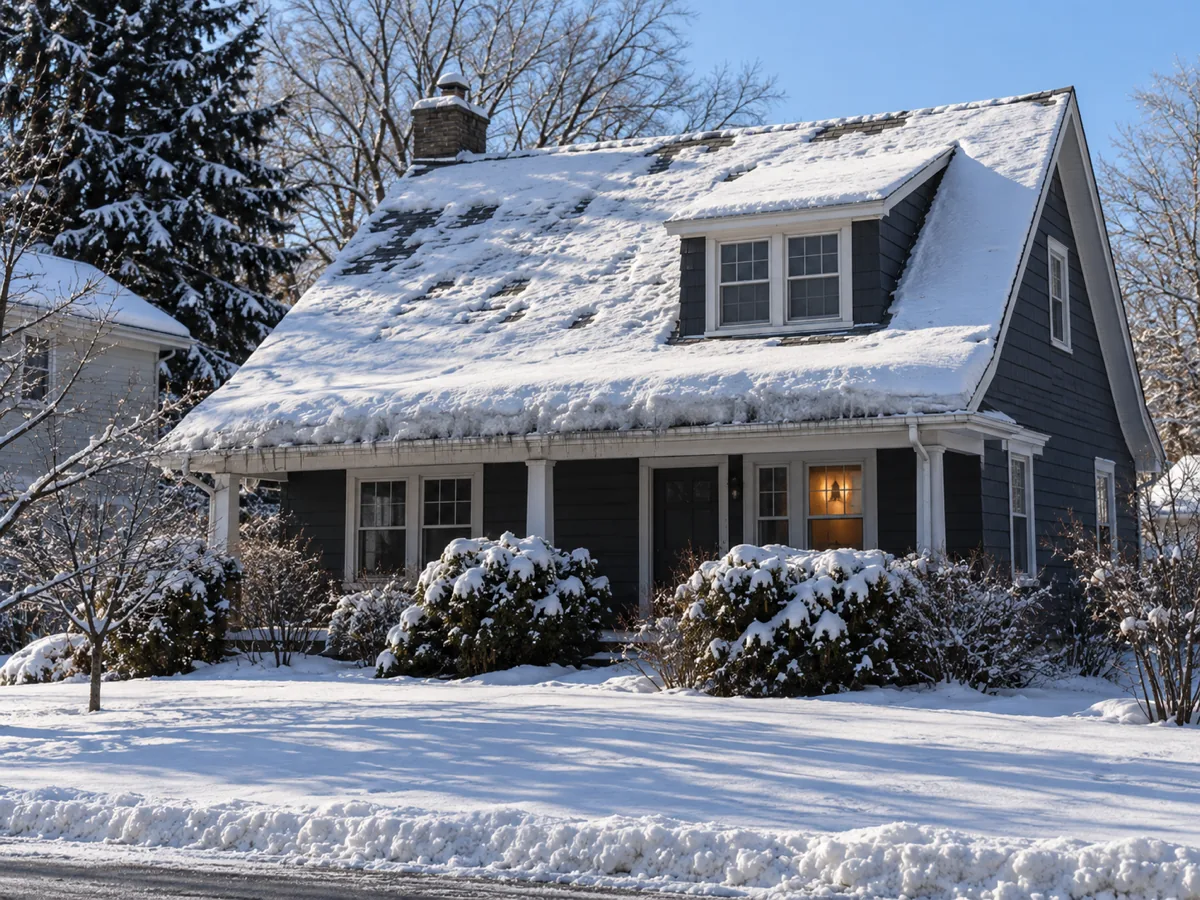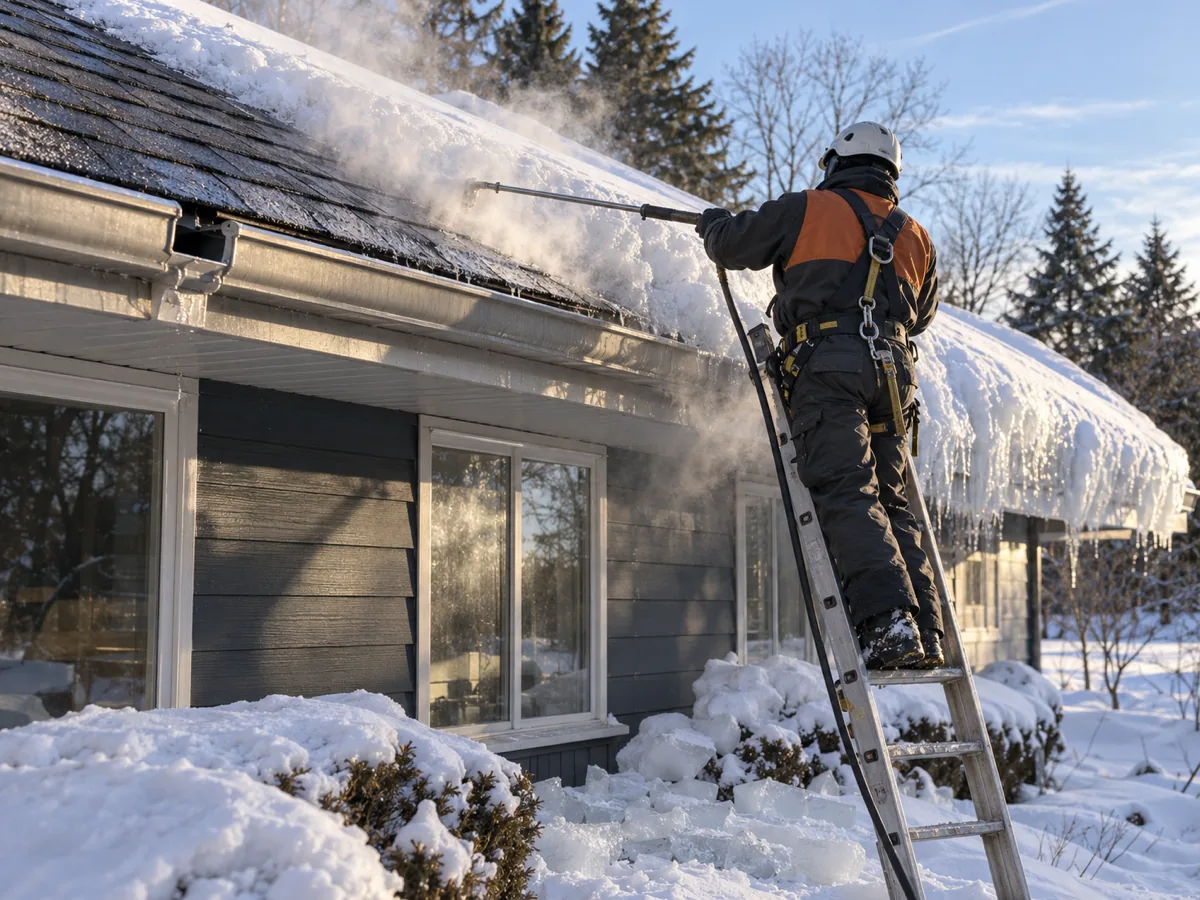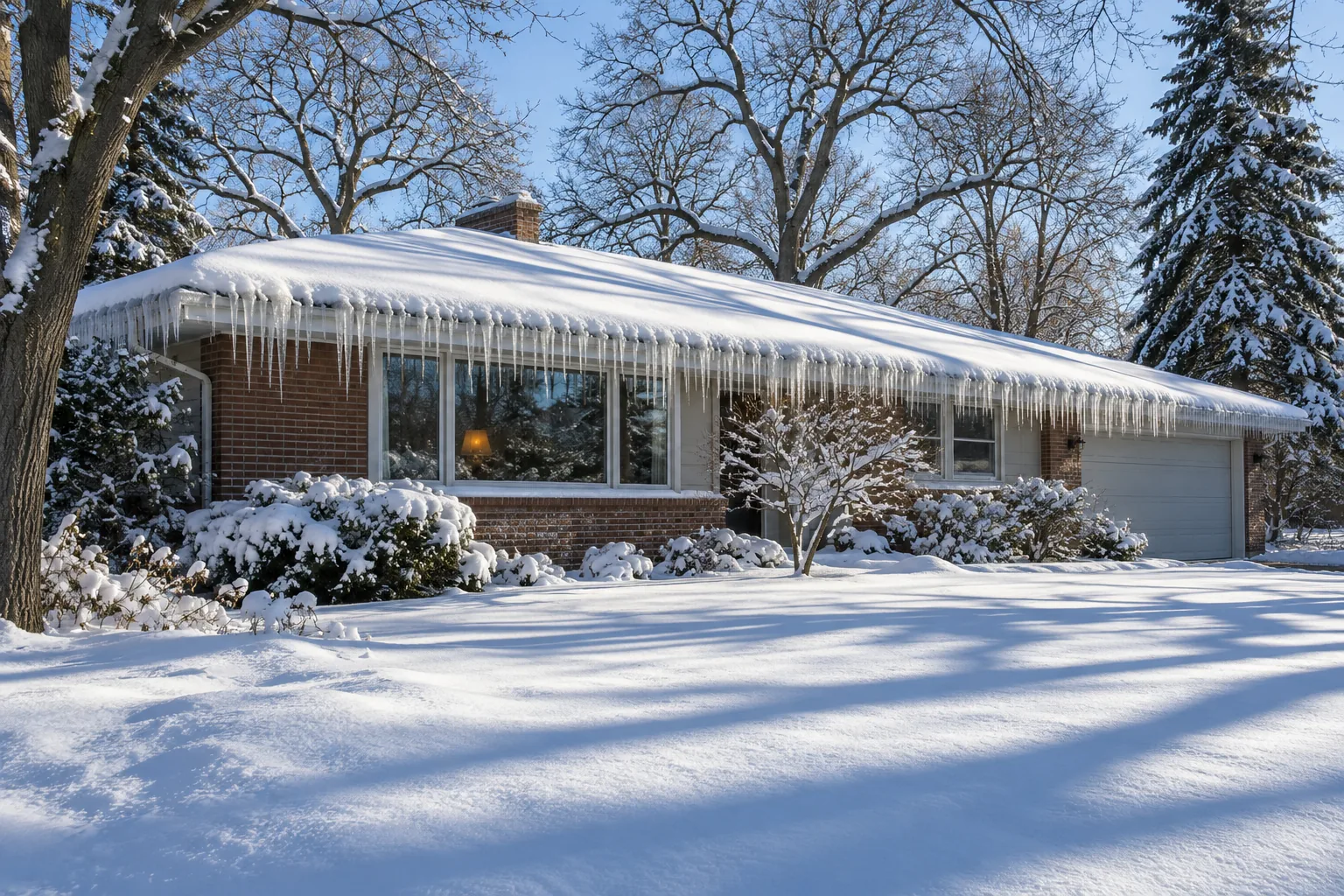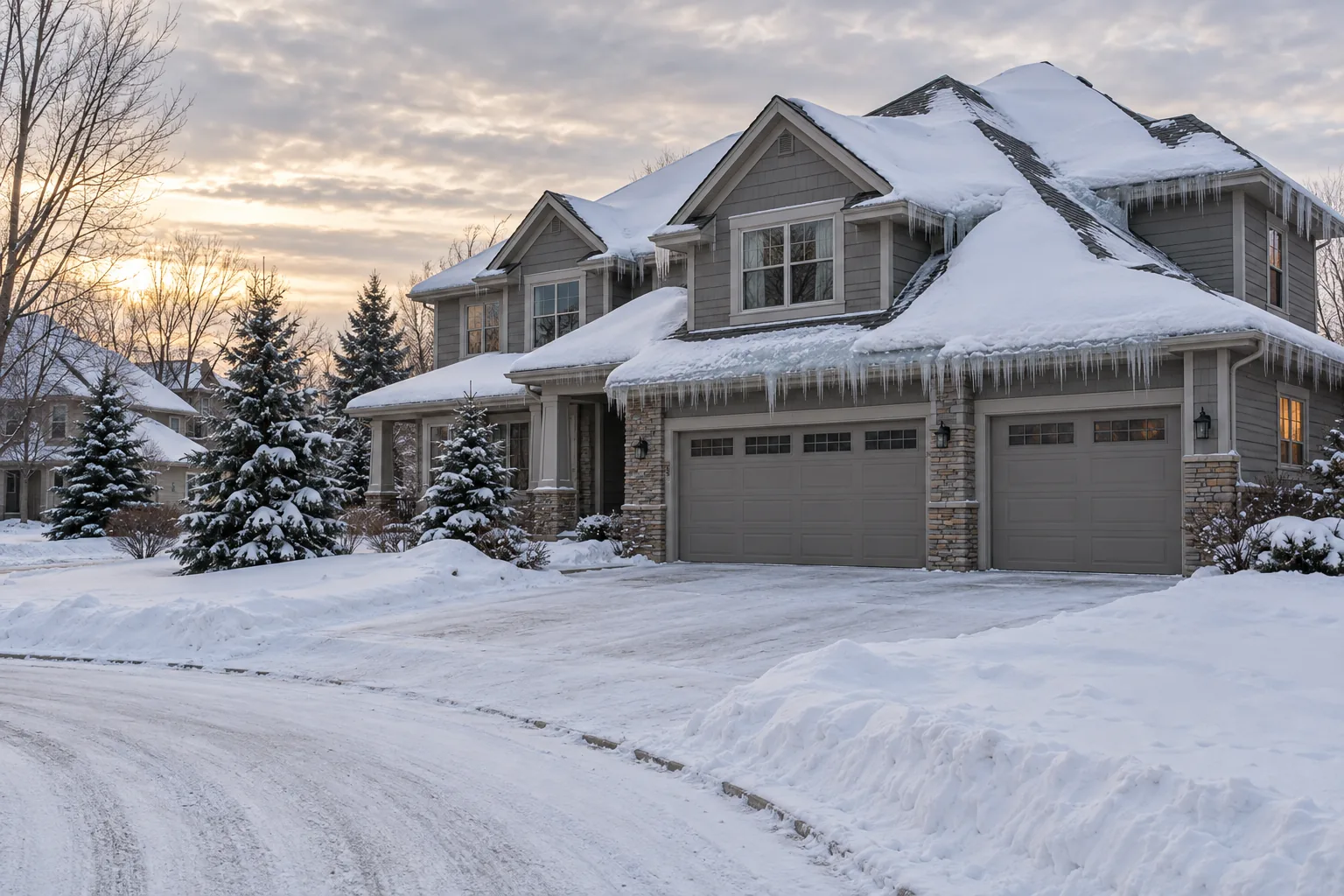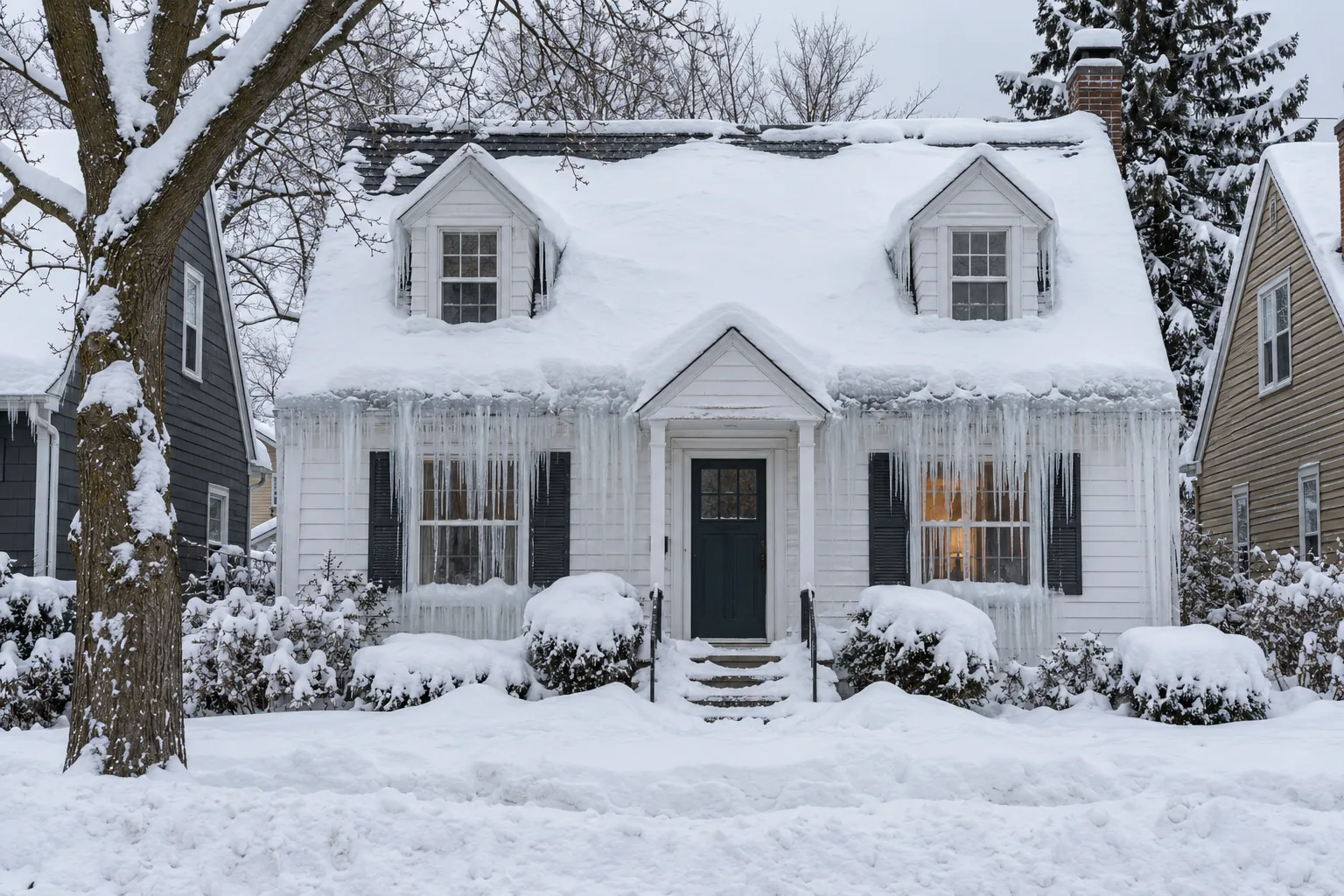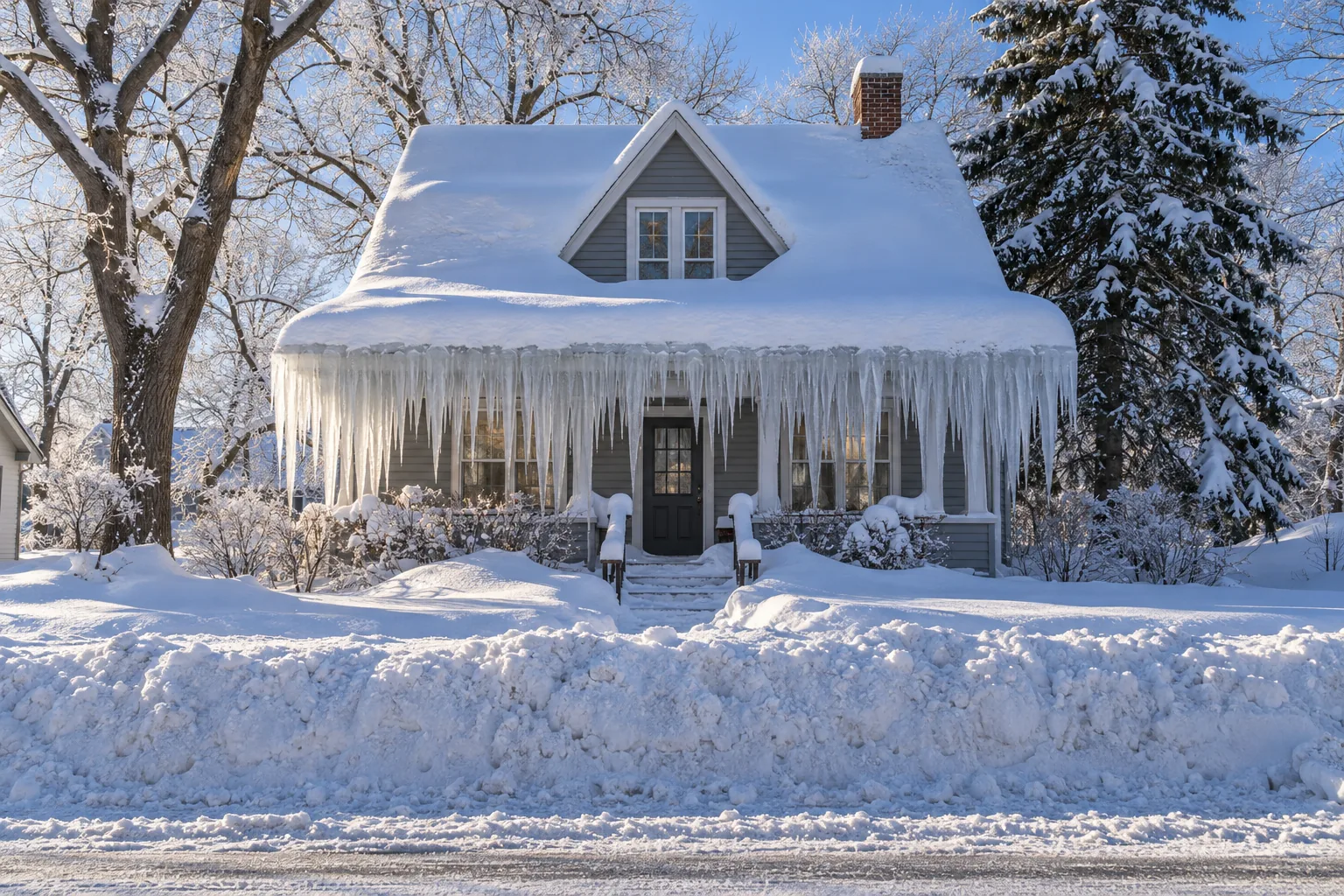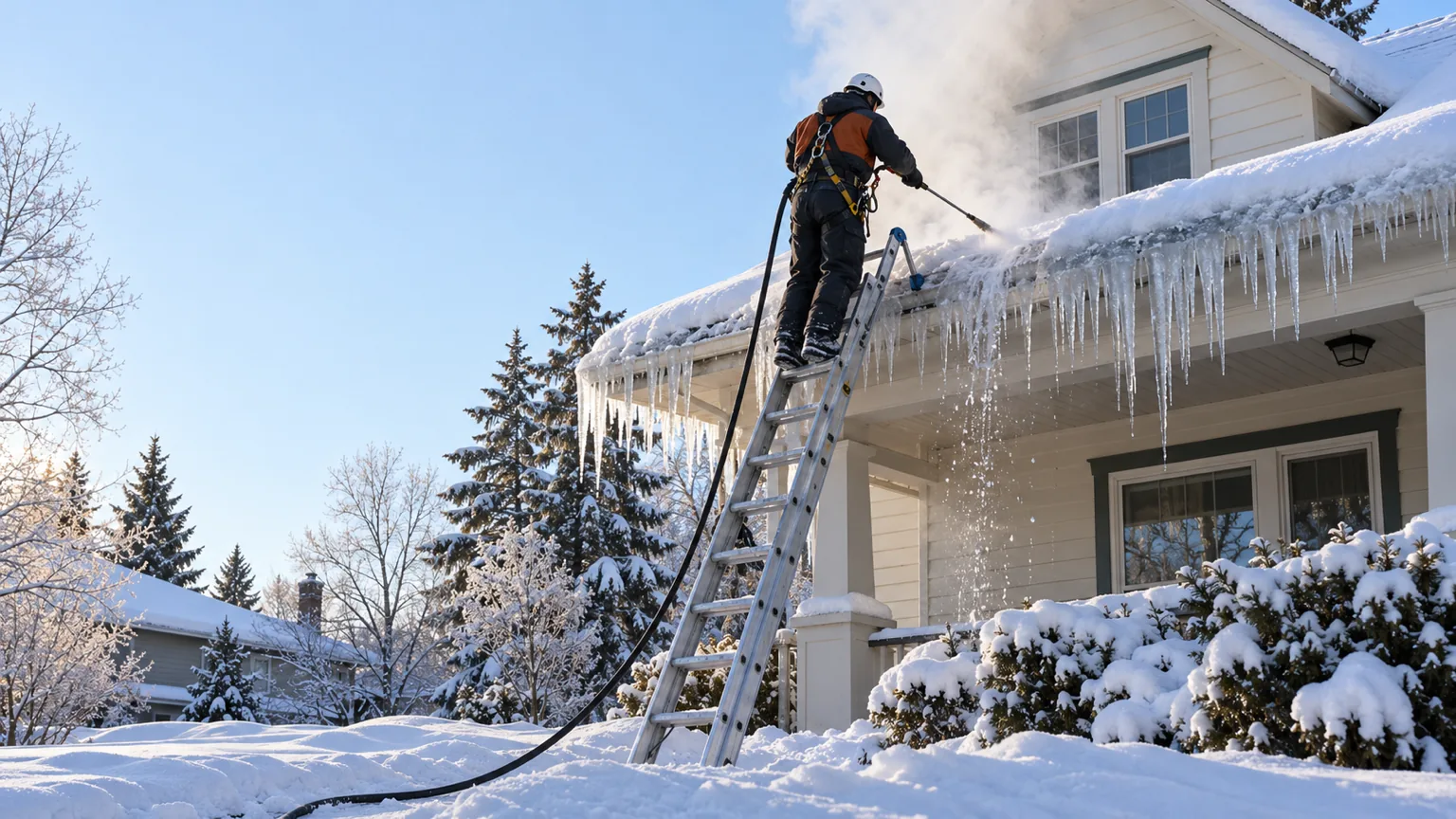
Technician in a harness on a ladder steaming a thick ice dam off the eave of a snow-covered Minnesota bungalow

Ice Dam Removal in Minnesota

We handle ice dam removal across Minnesota with low-pressure steam, from Minneapolis, MN, Edina and Roseville to St. Cloud and Rochester. We melt the eave ice down to the shingles so meltwater drains off the roof again. Calls are answered 24/7, including nights, weekends and holidays.

  • Service areaStatewide across Minnesota
  • MethodLow-pressure steam
  • Our workIce dams only
  • CallsAnswered 24/7

Common Causes of Ice Dams in Minnesota Homes

Ice dam removal means melting the ridge of ice at the roof edge, and the ice packed behind it, so snowmelt drains off the roof and stops backing up under the shingles. We do it across Minnesota with low-pressure steam. The bill mostly follows hours on the roof, which national cost surveys put at $400 to $600 an hour.

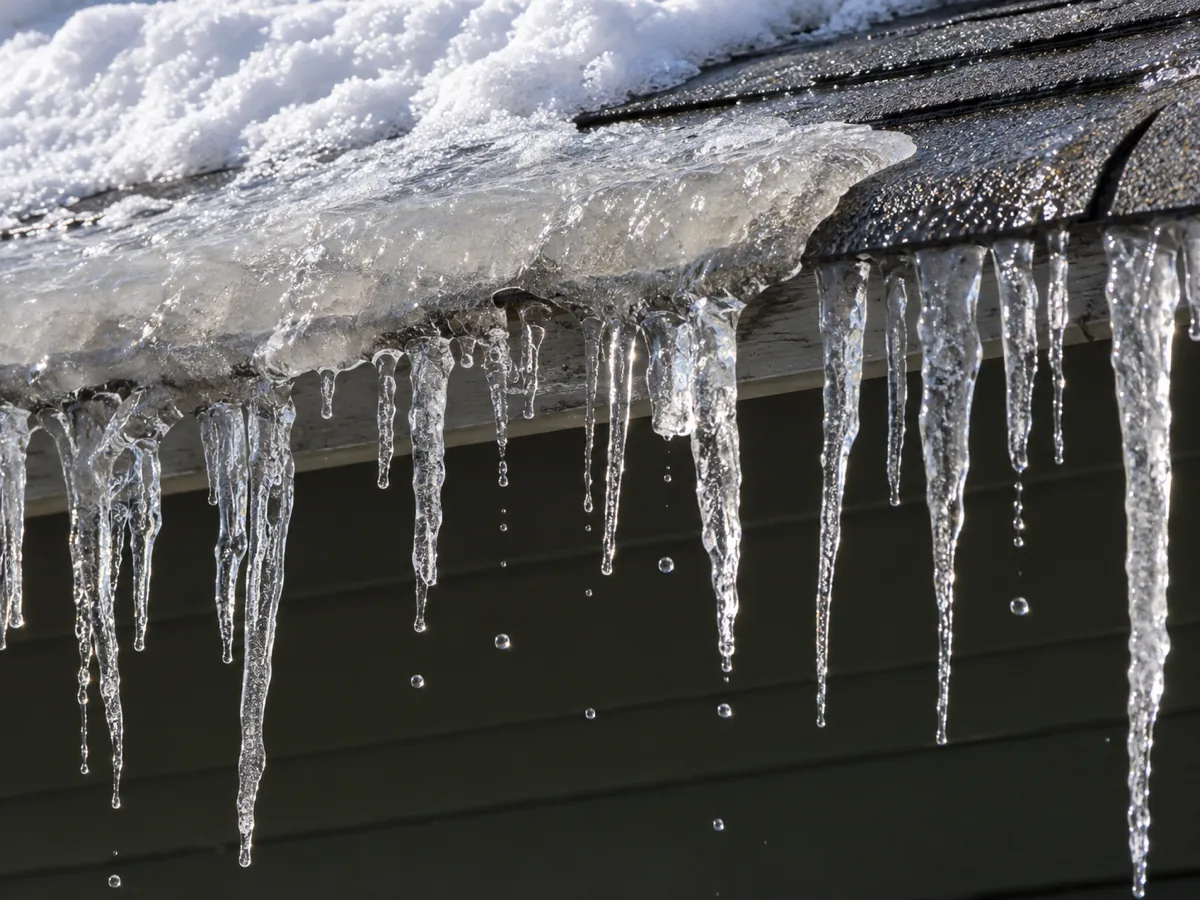
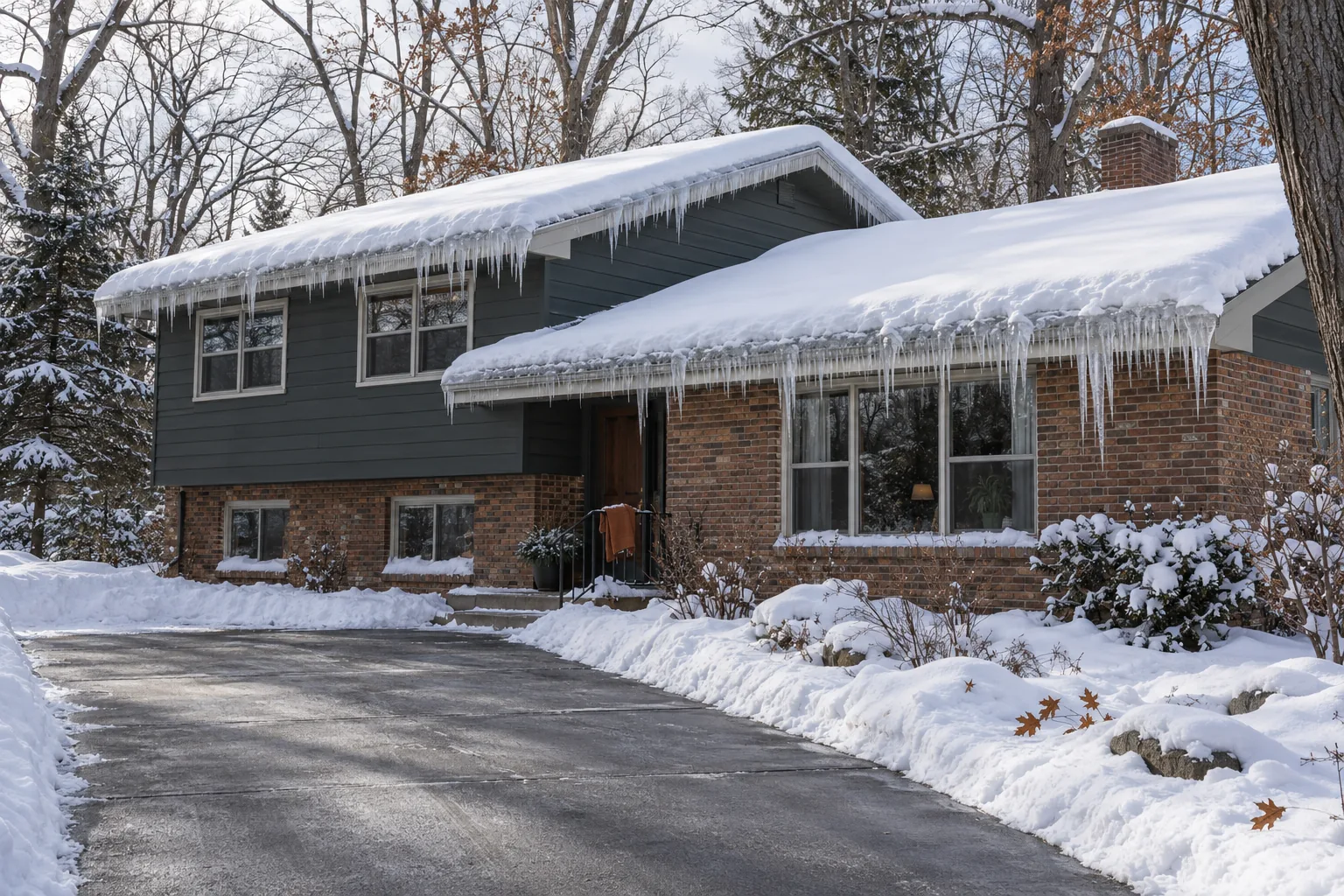
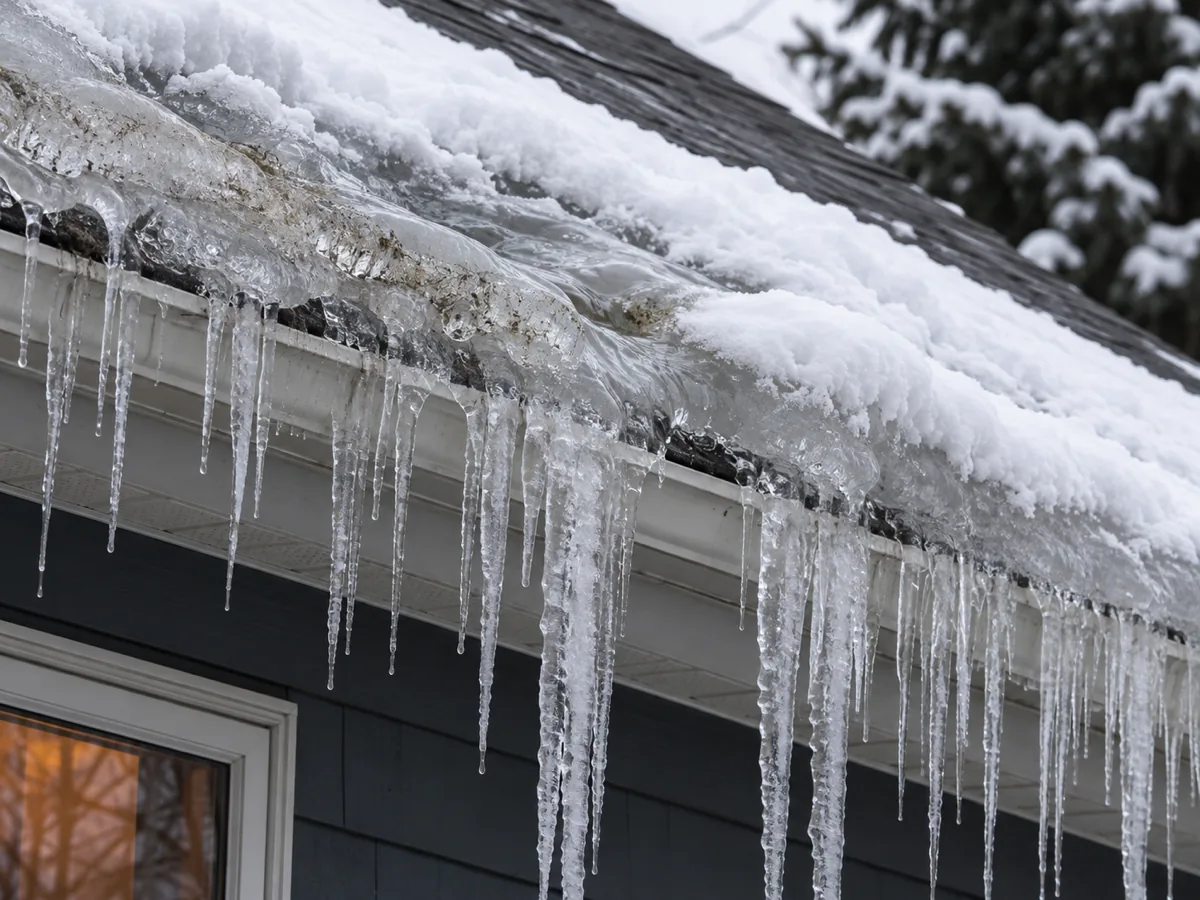
Thick ridge of ice and icicles along a snowy roof edge in Minnesota, the classic ice dam that traps meltwater
An ice dam is a ridge of ice at the roof edge that stops melting snow from draining off.

Heat Leaking Into the Attic

The attic above heated rooms

University of Minnesota Extension names air leaking into the attic as the major heat source behind ice dams in many homes. That heat melts roof snow from below, and the water freezes again at the cold eave.

  • Air leaking into the attic
  • Freezes again at the cold eave
Call about this
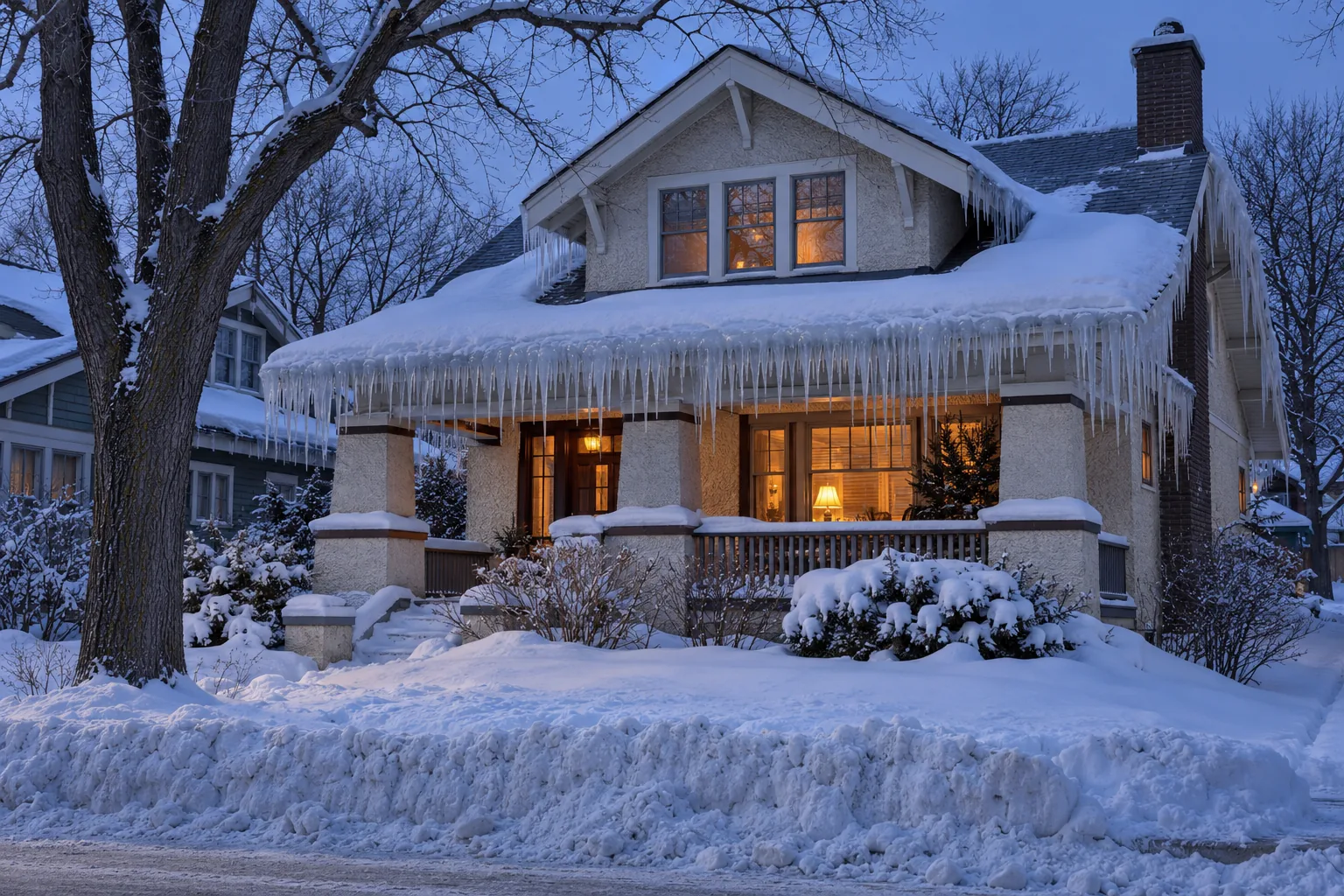
Snow melting thin on the warm upper roof of a Minnesota house while ice builds at the cold eave
Heat from the rooms below melts the upper roof snow, and the water freezes again at the colder eave.

Snow on a Warm Upper Roof

The roof over your living space

A dam needs snow on the roof while the upper roof stays above 32°F and the eave stays below it. NOAA's normals give the Twin Cities airport 51.2 inches of snow a year, so the snow is usually there.

  • Upper roof above 32°F
  • 51.2 inches of snow a year
Call about this
Meltwater dripping from icicles and an eave ice dam during a midwinter thaw day in Minnesota
Each thaw day sends more meltwater to the eave, and each cold night adds another layer of ice.

Thaw Days in the Middle of Winter

Worst from February into March

NOAA's 1991-2020 normals for the Twin Cities airport show about 9.5 days above freezing in January and 25.1 in March. Each thaw sends more water to the eave, and each cold night adds a layer of ice.

  • 9.5 thaw days in January
  • 25.1 in March
Call about this
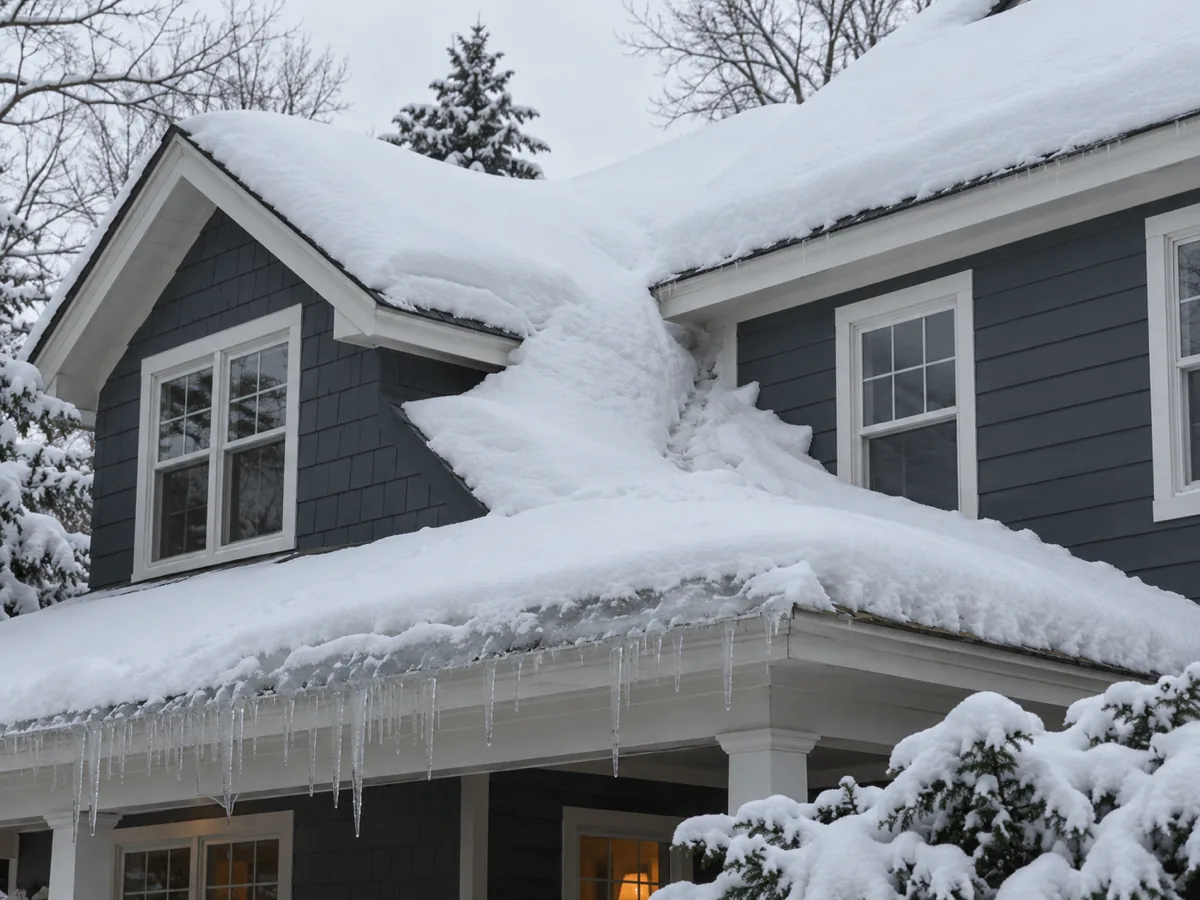
Drifted snow and an ice dam in a roof valley where a dormer and lower porch roof meet a Minnesota house
Valleys and lower roofs under a taller wall collect drifting snow and drain slowly, so they dam first.

Valleys, Dormers and Lower Roofs

Where two roof planes meet

Valleys, dormers and porch roofs below a taller wall collect drifting snow and drain slowly, so dams often build there first.

  • Valleys and dormers
  • Porch roofs
Call about this

Our Ice Dam Steaming Services

Ice dam steaming covers four situations we see every winter, and each one ends with water running off the roof edge again.

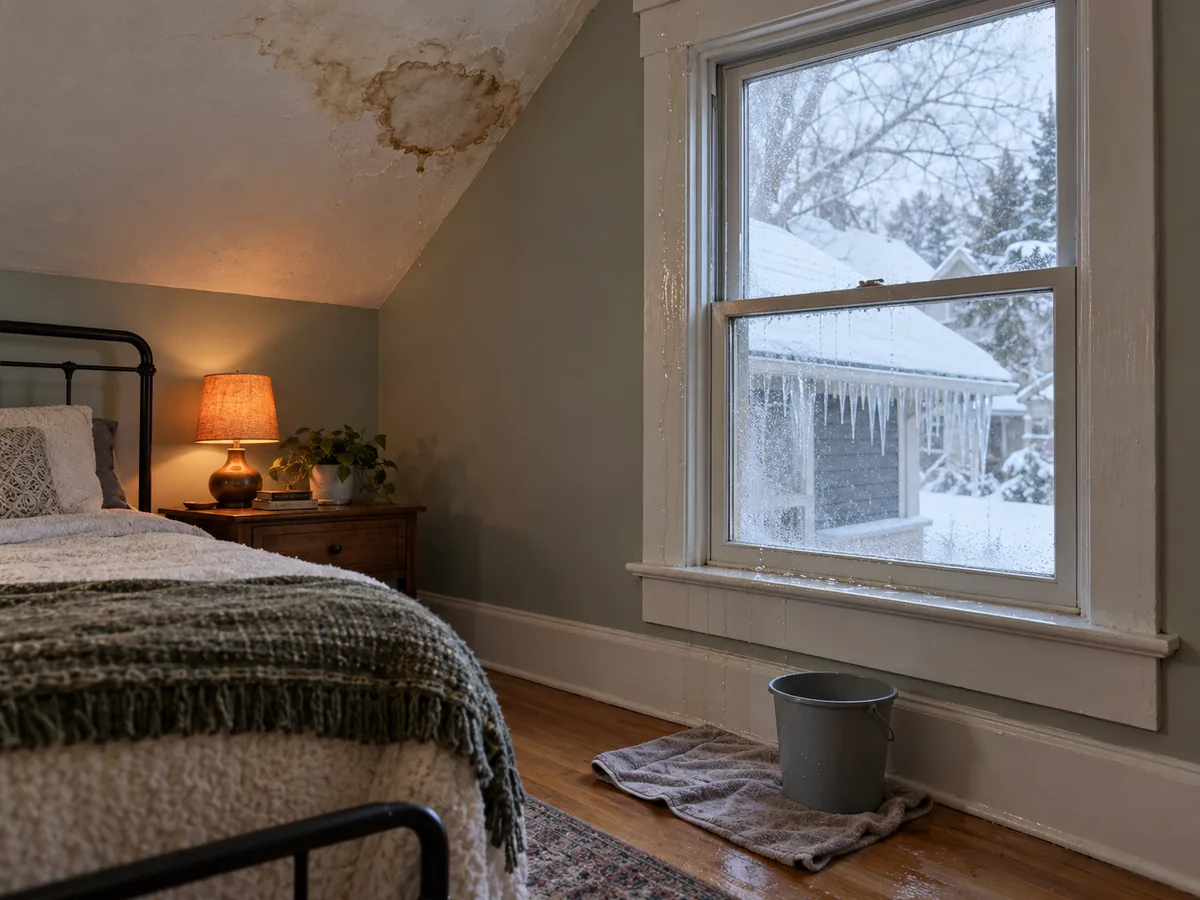
Brown water stain spreading on a bedroom ceiling and meltwater running down a window frame during an ice dam thaw
Water on a ceiling or down a window frame during a thaw means the dam is backing water into the house now.

Emergency Leak Channel

When water is already inside, we steam a drainage channel through the dam before anything else. Extension guidance says a channel stops working within days, so we then remove the rest of the dam.

  • Channel first
  • Stops working within days
Technician steaming an ice dam off the full length of a Minnesota eave, cleared shingles and gutter outlet behind
Full eave removal takes the ice off in sections down to the shingles and frees the gutter outlets.

Full Eave Dam Removal

We steam the ridge of ice off the eave in sections, down to the shingles, and free the gutter and downspout outlets so meltwater can drain.

  • Down to the shingles
  • Outlets freed
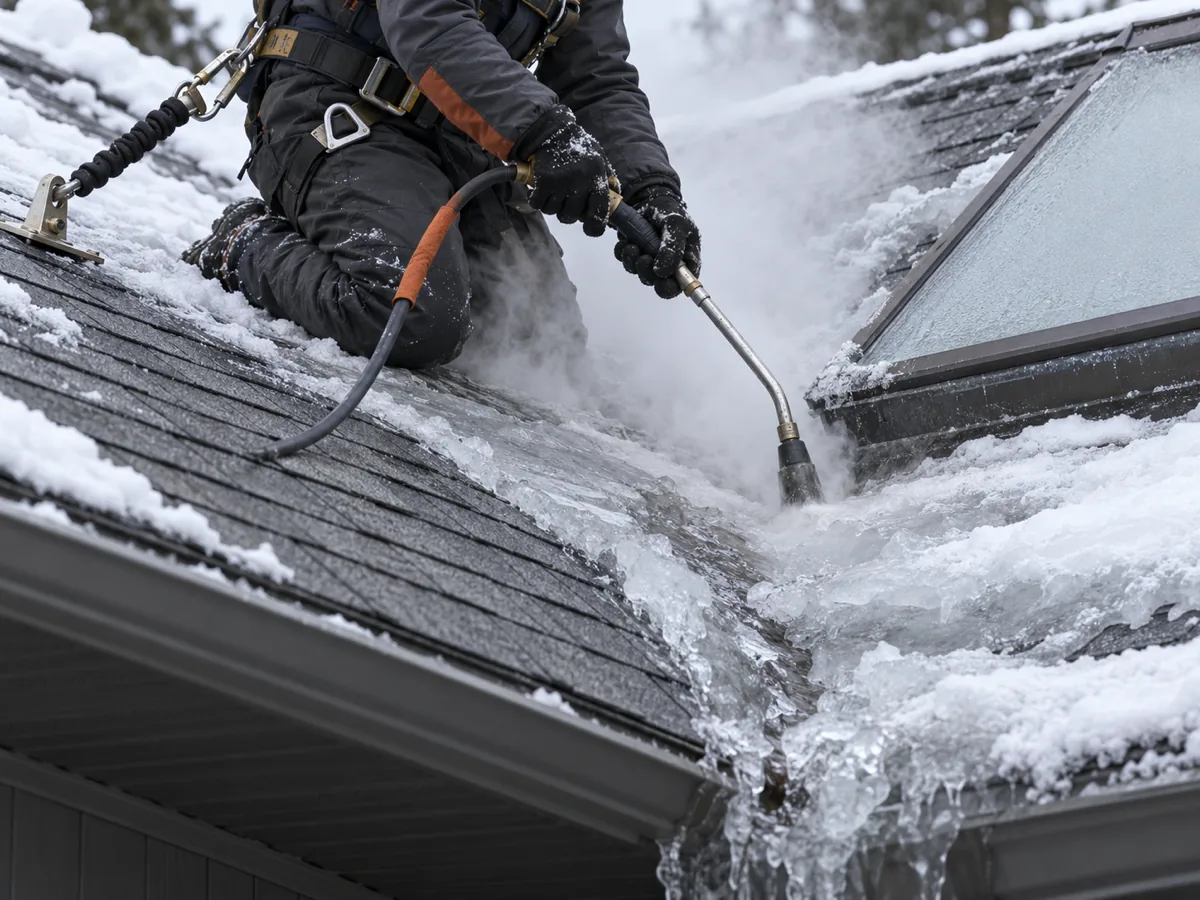
Gloved hands steaming thick ice back from a roof valley beside a skylight on a Minnesota home
Ice over valley flashing and skylights is steamed back slowly by hand.

Roof Ice Removal in Valleys

Roof ice removal around valleys and skylights is slower work because the ice runs thick over the flashing, so we steam it back by hand.

  • Valleys and skylights
  • Steamed back by hand
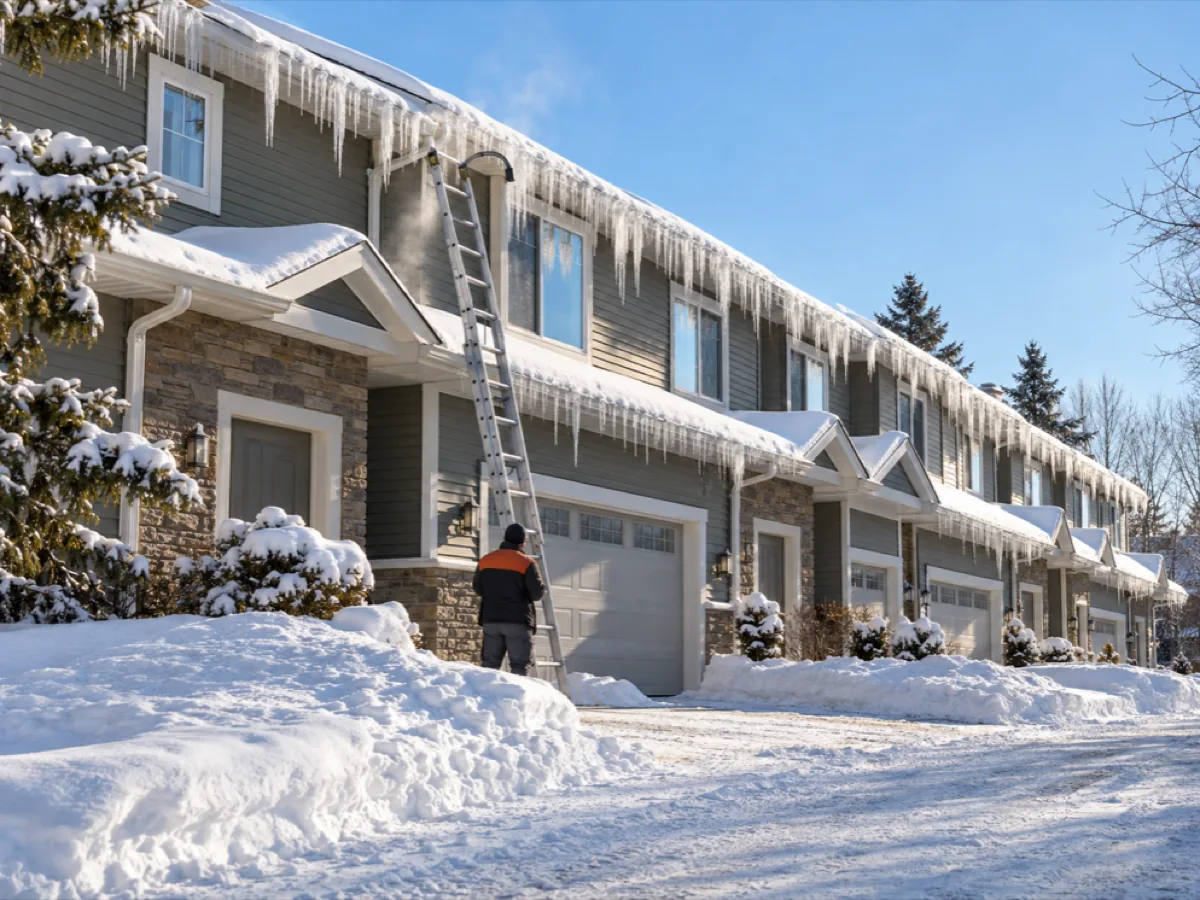
Long shared eave of a Minnesota townhome row with ice dams across several units and a ladder at one unit
On a shared roof the ice is cleared unit by unit along the eave.

Townhomes and Association Buildings

Townhome associations and property managers call us when long shared eaves leak into several units. We work along the roof unit by unit and tell the manager which eaves held the most ice.

  • Shared roofs
  • Unit by unit

Why Choose Us for Ice Dam Removal

Three habits decide whether a roof comes through an ice dam job with its shingles intact.

  • We Melt the Ice With Steam

    Low-pressure steam softens the ice until it lets go. We never hit a dam with a hammer or chisel, because a frozen shingle breaks before the ice does.

  • We Work on Ice Dams Only

    Ice dams are the one job we do, and our steamers, hoses and ladders are set up for winter roof edges and nothing else.

  • We Show You Where the Heat Escapes

    Early melt above a bath fan, chimney or recessed light points to warm air leaking into the attic. We show you those spots so you know why that eave dammed.

Signs You Need Ice Dam Removal

You can check most of these from the yard or from inside, with no ladder. Our guide explains why ice dams form on Minnesota roofs.

A Ridge of Ice at the Eave

Look along the roof edge from the yard. A raised band of ice with snow banked behind it is the dam itself.

A Solid Row of Icicles

A solid row hanging from the gutter line usually means water is reaching the edge and freezing in front of a dam.

Stains Near an Outside Wall

A brown ring or bubbling paint on a top-floor ceiling along an exterior wall usually means water is coming in at the eave.

Wet Window Frames

On a thaw day, check the tops of upstairs window frames. Damp trim or drips on the sill mean meltwater is inside the wall.

Ice on the Soffit

Ice forming on the soffit or its vents means water has already backed up past the shingles.

Bare Roof Above, Deep Snow Below

A bare upper roof over a deep band of snow at the edge shows heat from the house melting snow that freezes again lower down.

Ice Dam Removal Cost in Minnesota

The price follows time on the roof. These are typical figures from national cost surveys, and your price comes from the hours your roof needs.

Cost factorTypical figureWhat moves it
Steam removal rate$400 to $600 an hourRoof height, pitch and valleys
Time on an average roofTwo to three hoursDam thickness and how many thaws stacked ice
Billing minimumTwo hours at most contractorsA small one-story eave still meets it
Typical total job$600 to $1,800, national average $1,200Long, multi-level or shared townhome eaves
Snow cleared above the damUsually included in the ice dam priceDeep, packed snow

Our Service Areas Across Minnesota

We take calls from anywhere in the state, and these eight cities have their own pages. We also take calls from Saint Paul, Bloomington, Richfield, Savage, Plymouth, Maple Grove, Eden Prairie, Minnetonka, Eagan, Burnsville and Duluth, which do not have their own page yet.

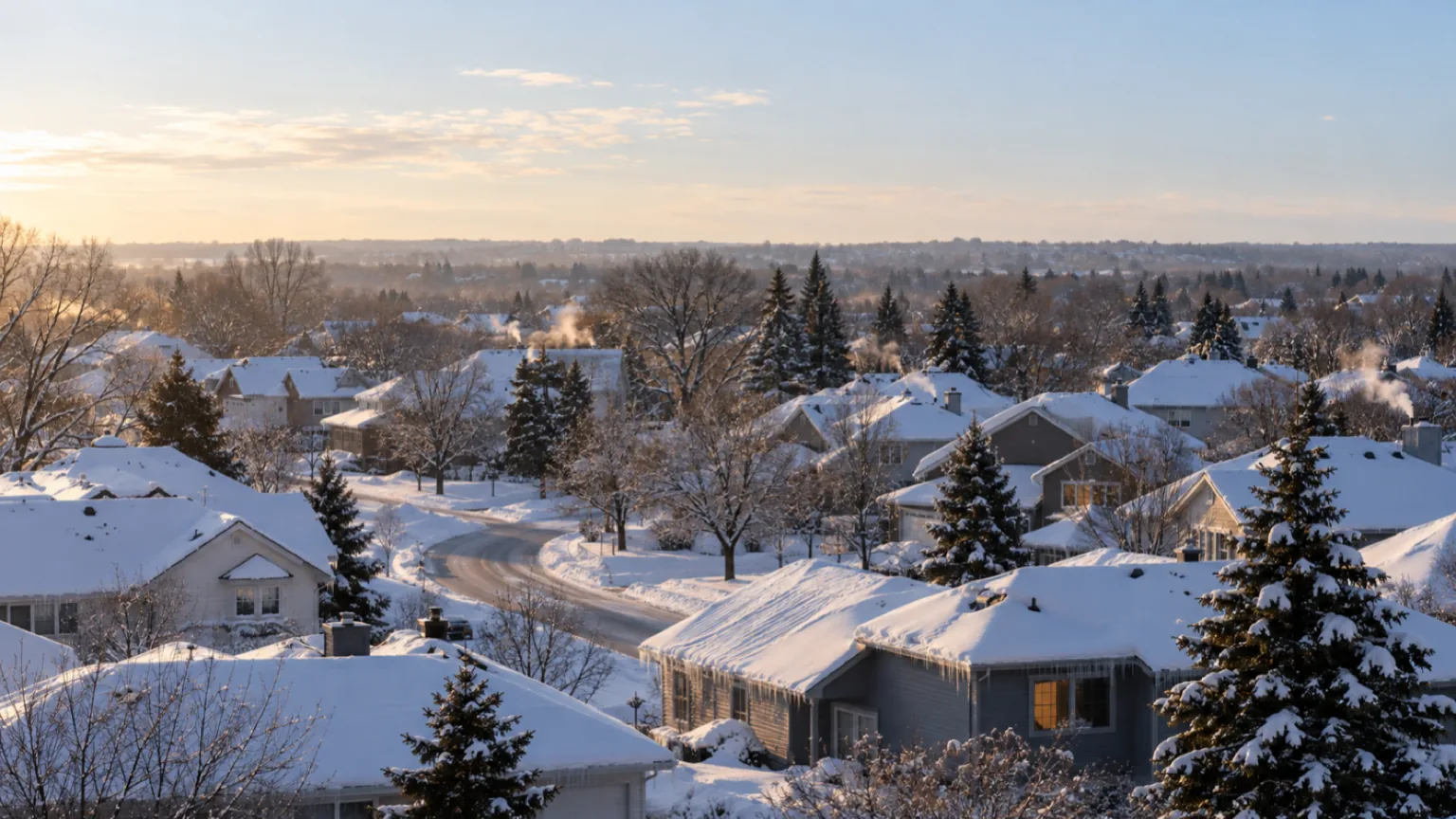
Elevated winter view over snow-covered suburban rooftops and bare oaks in the Twin Cities metro of Minnesota
8areas in Minnesota

Across Minnesota

  • Saint Paul
  • Bloomington
  • Plymouth
  • Maple Grove
  • Eden Prairie
  • Minnetonka
  • Eagan
  • Burnsville
  • Savage
  • Richfield
  • Duluth

Our Ice Dam Removal Process

Most jobs follow the same six steps, and the order matters more than speed. More on how our steam crews work.

  1. 1

    You call and describe the roof

    We ask where water is showing, how many stories the house has and whether the dam sits over a valley or porch. Those answers decide the ladder and which eave we start on.

  2. 2

    We look before we climb

    From the yard we trace the dam and any bare patches higher up, then check the ceilings you have noticed.

  3. 3

    We open a channel where water is getting in

    If a ceiling is dripping, we steam a narrow path through the dam above it first so the backed-up water drains.

  4. 4

    We clear the snow just above the dam

    We pull back only enough snow to give meltwater a route off the roof, working gently because Extension guidance notes rakes may damage roofing.

  5. 5

    We steam the dam off in sections

    Low-pressure steam softens the ice until it releases, and we work along the eave to the drip edge. National cost surveys put an average-sized roof at two to three hours.

  6. 6

    We free the outlets and walk you through it

    We clear ice from the gutter and downspout outlets, then show you which eaves held the most ice.

Steam vs Chisels, Salt and Pressure Washers

Every method melts or breaks ice. The difference is what each one leaves behind on your roof.

MethodWhat it does to the roofWhere it fits
Low-pressure steam (our method)Softens the ice and leaves shingles and granules in placeEvery dam, including valleys
Hammer, chisel or axeCan crack shingles and cut into the underlayment under the iceNowhere on a shingled roof
Rock salt or calcium chlorideMelts a narrow channel slowly; runoff can corrode metal and harm plantsA short stopgap
Pressure washerCan strip granules and drive water under the shinglesRarely on shingles

What to Do Before Our Crew Arrives

These steps keep the damage small while you wait, and none of them involve a ladder. See what to do before the crew arrives for more.

  1. Catch the water

    Put buckets and towels under drips and move furniture and electronics away from the wet wall.

  2. Cut power to a wet fixture

    If water is coming through a light, switch that circuit off at the panel.

  3. Stay off the roof

    Do not climb onto ice or lean a ladder on an iced gutter, which can pull away.

  4. Photograph the damage

    Take dated pictures of stains, wet walls and the dam for your insurer.

  5. Clear a path to the house

    Shovel a route to the leaking eaves so we can set ladders and run the steam hose.

  6. Start drying right away

    Extension guidance says to dry wet areas immediately, because ice dam moisture can lead to mold and mildew.

How Insurance Pays for Ice Dam Damage

Most homeowners policies treat the water damage and the ice removal as two separate things.

MPR News reported that insurers generally cover water damage from ice dams but treat removing the dam as maintenance the homeowner pays for. A Minnesota Department of Commerce spokesperson told MPR that a claim can be denied if the insurer argues the home was not maintained, and deductibles usually run $1,000 or more. Read how ice dam insurance claims work before you file.

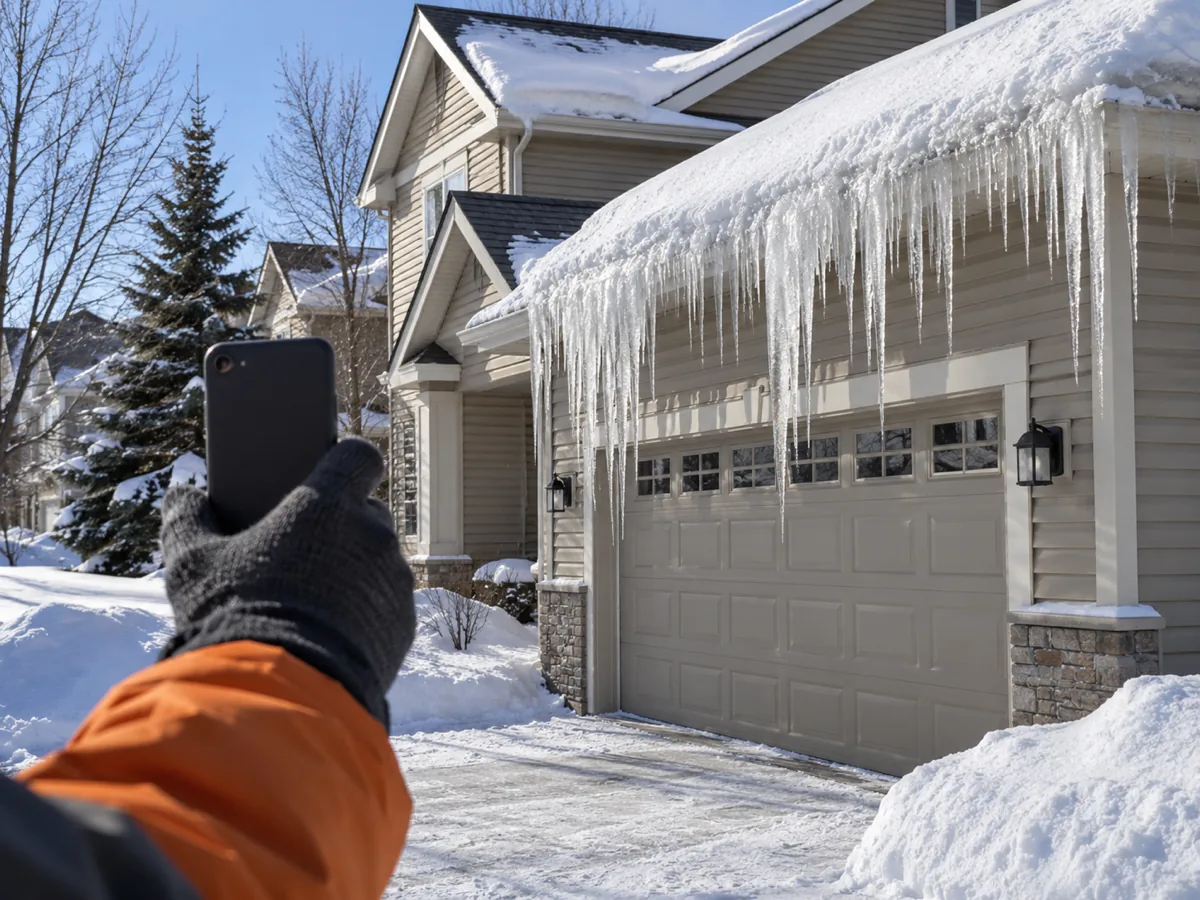
Homeowner photographing an ice dam on a Shakopee home for an insurance claim
Dated photos of the ice and any stains help when you file a claim.

Call for 24/7 Ice Dam Removal

Water coming through a ceiling during a thaw should not wait for morning. We open a drainage channel first, then remove the rest of the dam.

Call {phone}

Call (612) 471-2509
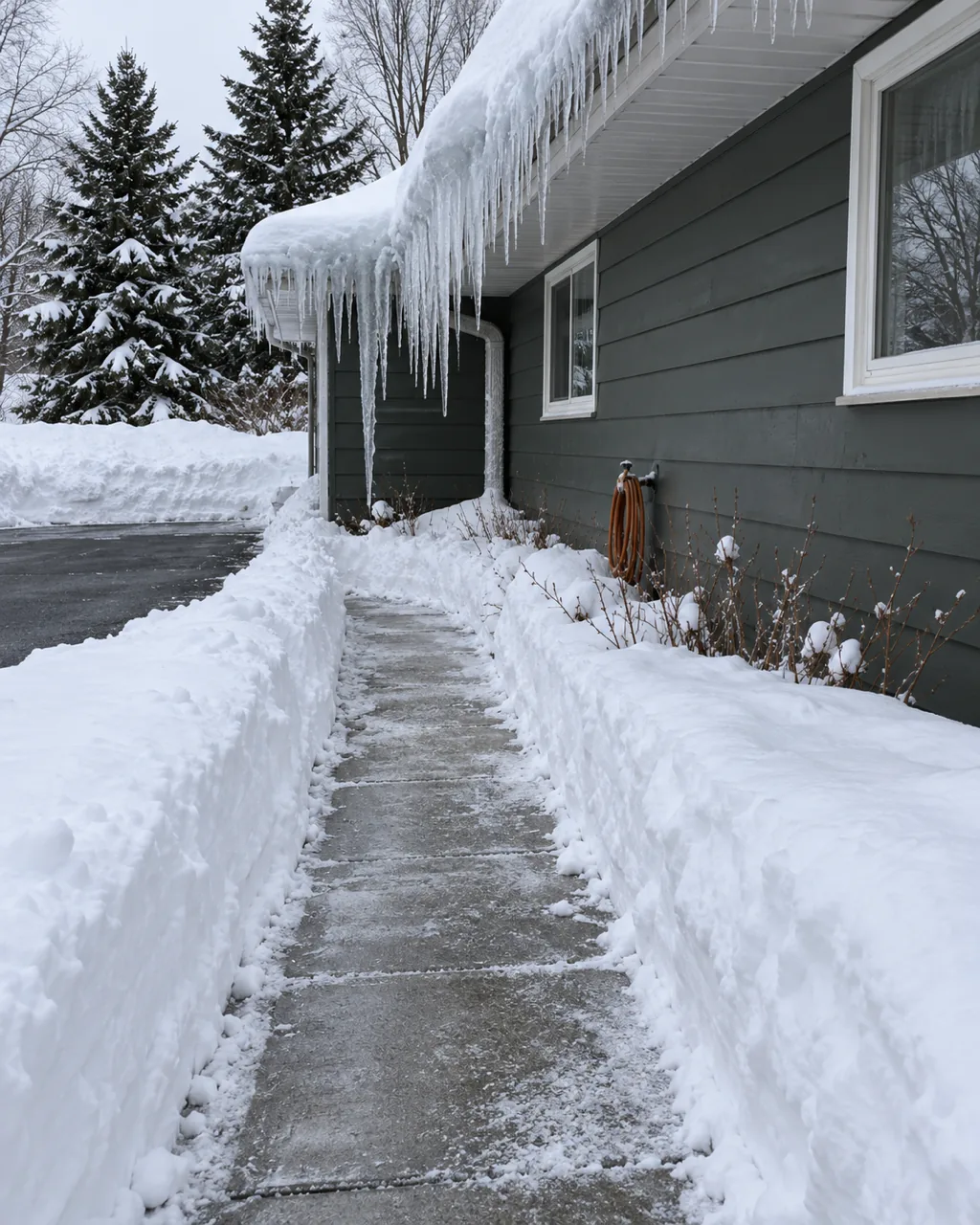
Shovelled path and driveway beside a snowy Minnesota house with heavy eave ice, clear access before an ice dam crew arrives

FAQs About Ice Dam Removal in Minnesota

Questions homeowners ask us most often during a Minnesota winter.

Your question isn't here?

(612) 471-2509Call now

Can I remove ice dams myself?

You can pull snow off from the ground with a roof rake, though University of Minnesota Extension notes rakes may damage roofing. Climbing onto an iced roof or chipping at the dam is where people get hurt and shingles break.

Can an ice dam cause a roof leak inside the house?

Yes. Water backed up behind the dam works under the shingles and can leak into ceilings, walls and insulation, according to University of Minnesota Extension. An ice dam roof leak usually shows on top-floor ceilings first.

Will the ice dam come back after it is removed?

It can, as long as snow sits on a roof warmed from below. Extension researchers name attic air leakage as the main heat source in many homes, so sealing those leaks matters most. See stopping dams before next winter.

Are roofers responsible for ice damming?

Usually not for the dam, which comes from attic heat and weather. Minnesota's residential code does require ice barrier underlayment from the roof edge to at least 24 inches inside the exterior wall, so ask whether a recent re-roof included it.

Can I wait for the ice dam to melt on its own?

Only if no water is getting inside. A dry dam can wait for a planned visit, but the Twin Cities average 25.1 days above freezing in March, and each thaw pushes more water against the ice.

Is there free ice dam removal in Minnesota?

No. Removal is paid work, and insurers generally leave it to the homeowner even when they pay for the water damage. See what ice dam removal costs for typical prices.

Call for Ice Dam Removal in Minnesota

Tell us where the ice is and where water is showing, and we will plan the visit around your roof. Between winters, our Minnesota ice dam guides cover causes and prevention.

Call {phone}

Call (612) 471-2509