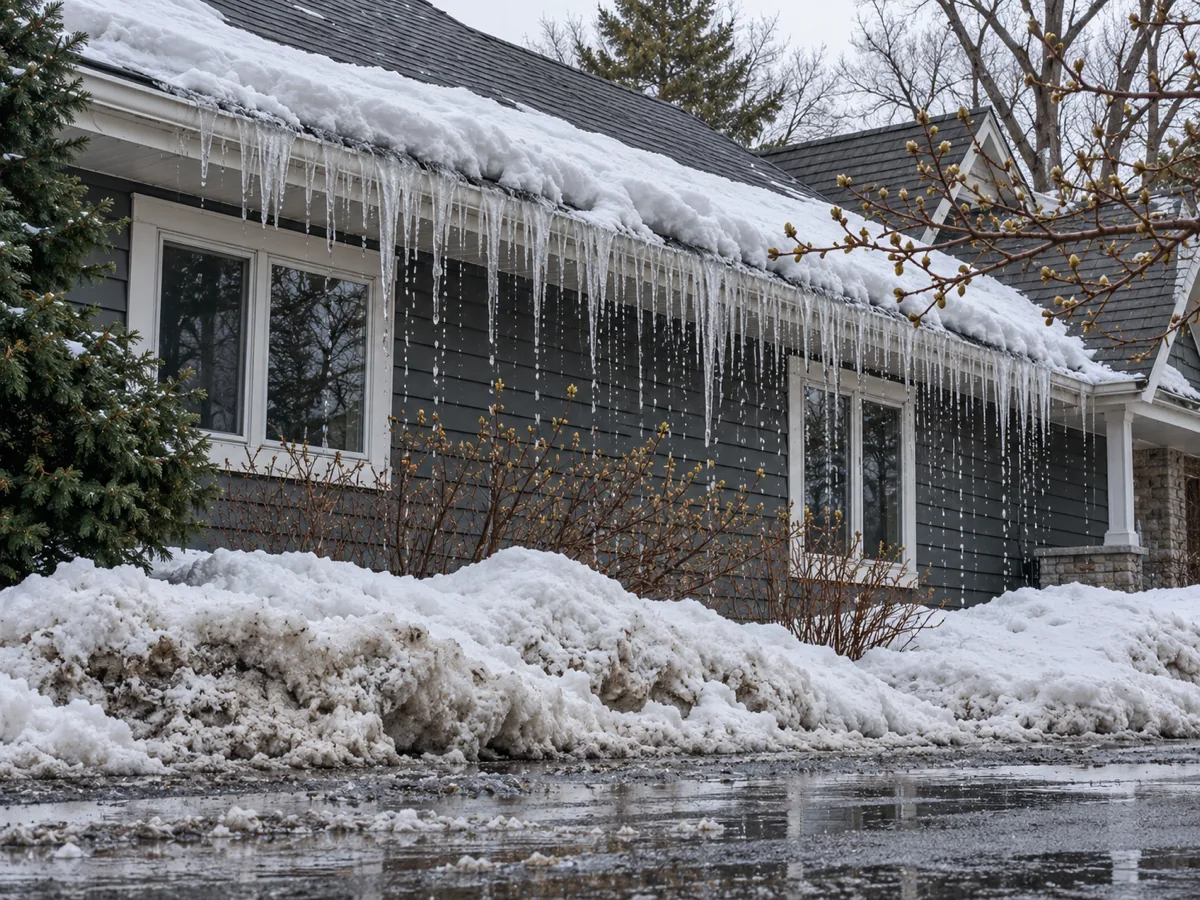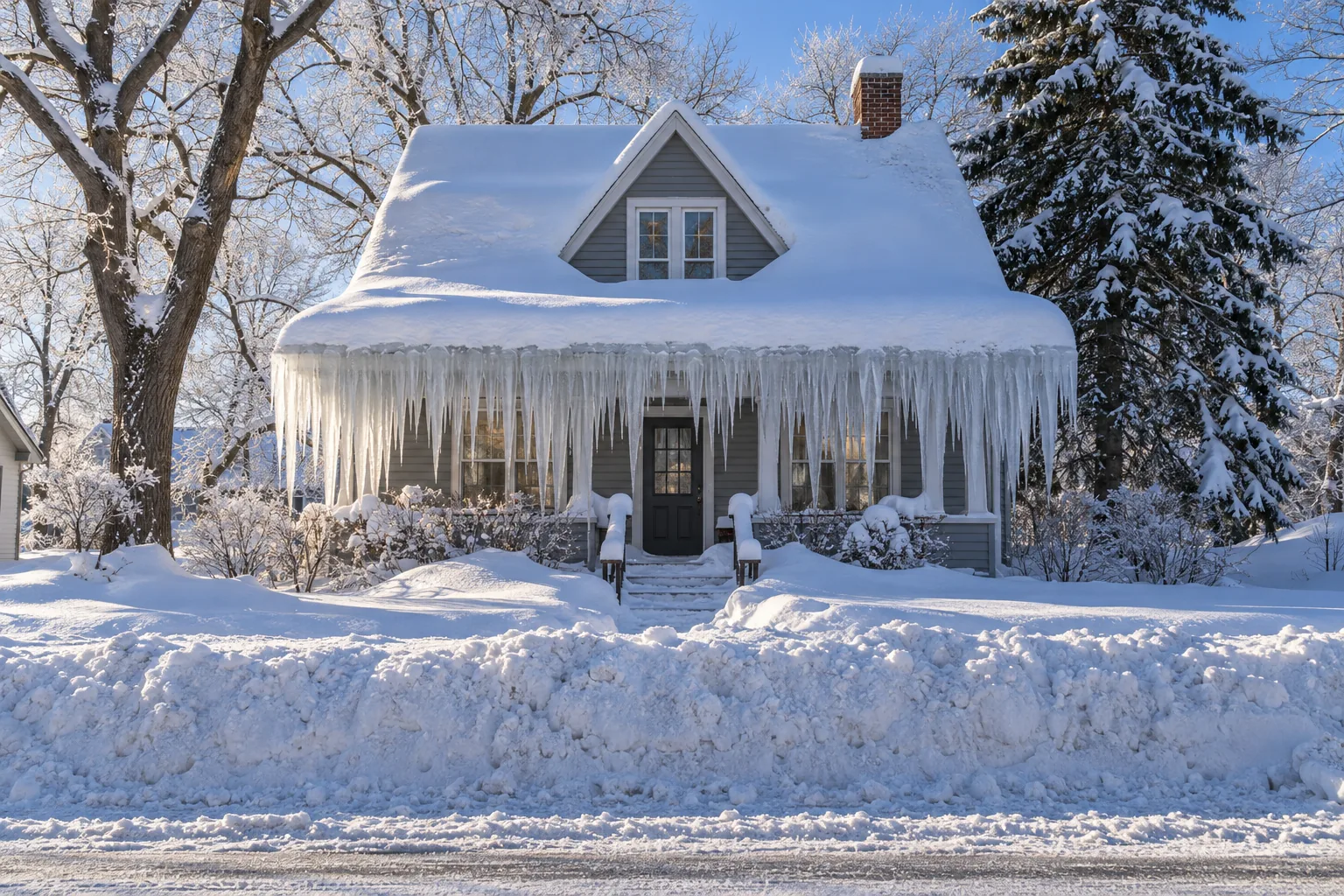
Central Minnesota house in St. Cloud under deep roof snow with a heavy ice dam and icicles along the eave

Ice Dam Removal in St. Cloud, MN

We offer ice dam removal for St. Cloud, MN homes in 56301, 56303 and 56304, on the Stearns, Benton and Sherburne county sides of the city. Our crew melts thick eave ice with low-pressure steam until meltwater reaches the gutter. Calls are answered 24/7, including nights, weekends and holidays.

  • Service areaSt. Cloud and all of Minnesota
  • MethodLow-pressure steam
  • Our workIce dams only
  • CallsAnswered 24/7

Ice Dam Causes on St. Cloud, MN Roofs

St. Cloud ice dam removal is steam work at the eaves: we melt the frozen band at the roof edge so trapped meltwater can reach the gutter. We cover the whole city across three counties. NOAA's St. Cloud station records 83.5 days a year when the high stays at freezing or colder, more than the Twin Cities airport's 72.3.

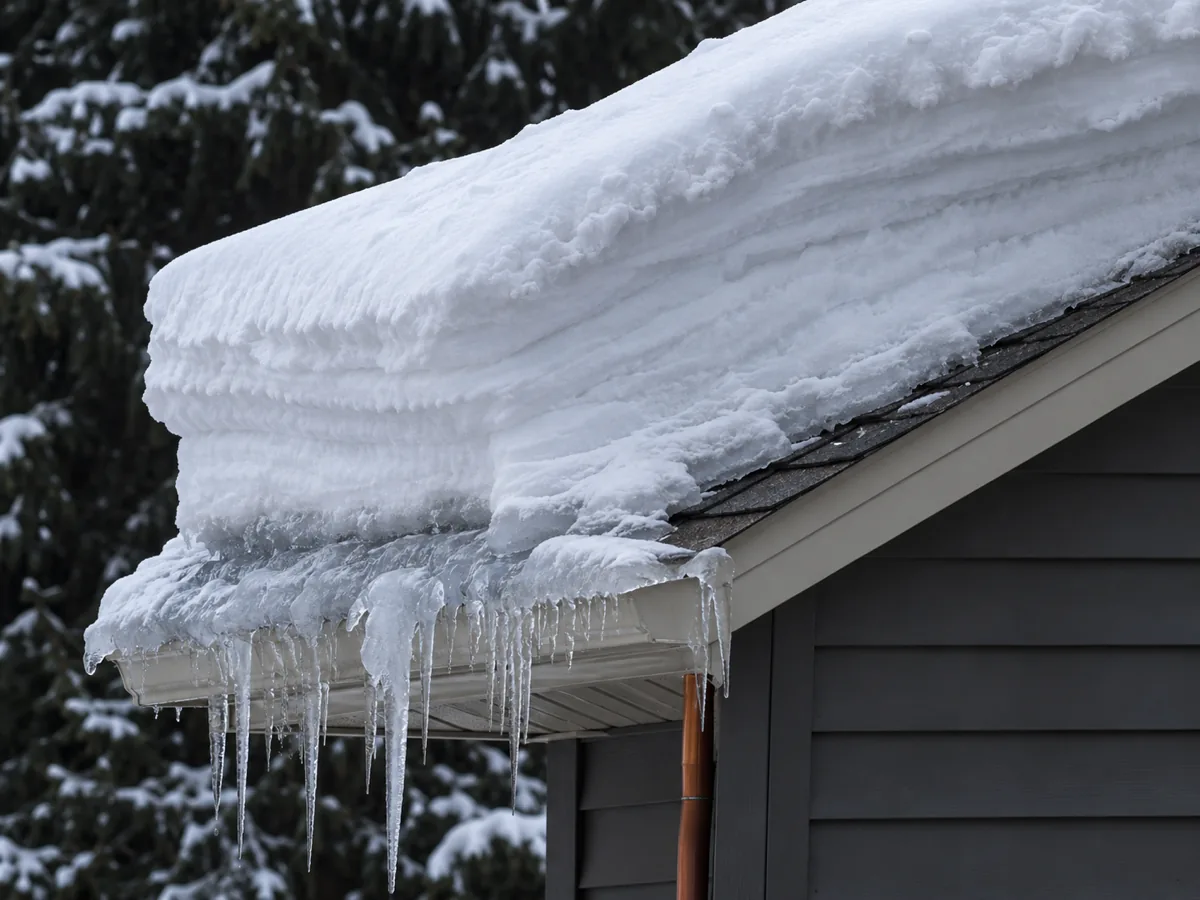
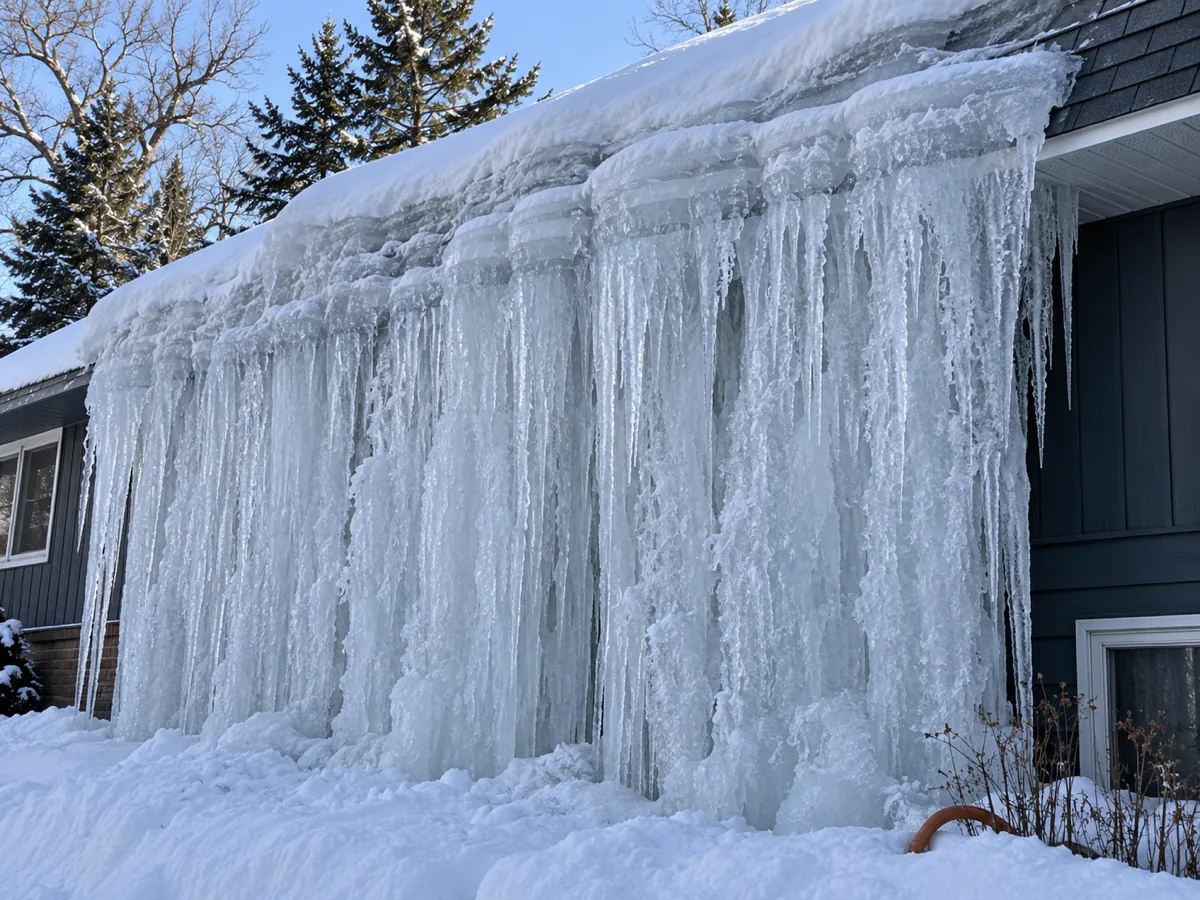
Thick layered ice dam built over weeks of hard freeze on the north eave of a St. Cloud home
With few thaws in January, a St. Cloud dam keeps adding ice for weeks.

Long Freezes Between Thaws

Every north and east eave

The St. Cloud Regional Airport station averages only 6.9 days in January with a high over 32°F. With so few thaws, a dam keeps adding ice for weeks, and by February it can be thick enough to hold back a lot of water.

  • 6.9 thaw days in January
  • Keeps adding ice for weeks
Call about this
Cross-section of deep layered roof snow sitting above an ice dam at the eave of a St. Cloud home
Deep roof snow insulates the deck, so attic heat melts the bottom layer and feeds the dam all winter.

Deep Snow That Holds the Heat In

The roof over heated rooms

NOAA puts normal St. Cloud snowfall at 47.9 inches, and the 2022-23 winter set the city's all-time record of 88.2 inches, according to the DNR State Climatology Office. A thick snow blanket can trap attic heat against the roof deck, so the bottom layer melts while the eave stays frozen.

  • 47.9 inches normal
  • 88.2-inch record
Call about this
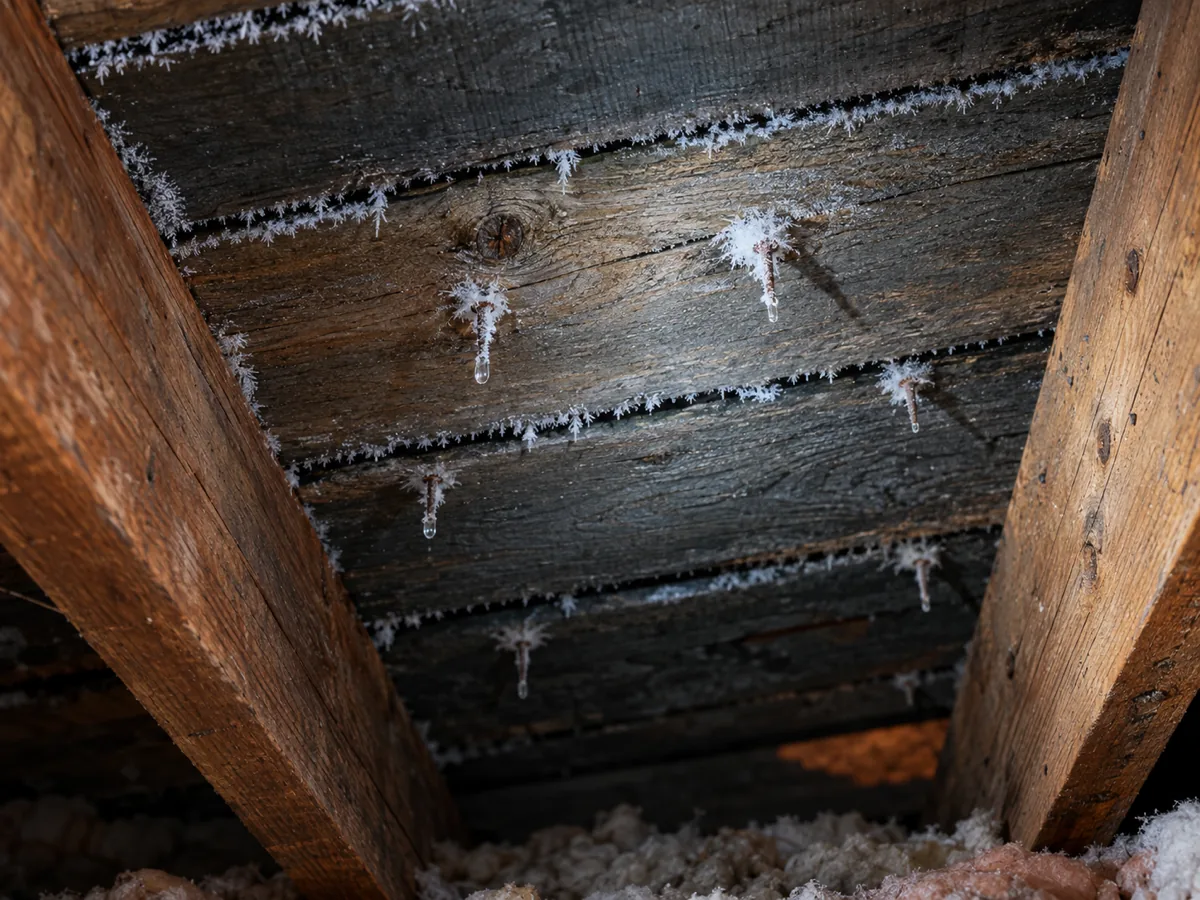
Frost on roofing nail tips and the underside of the roof deck in a St. Cloud attic, a sign of heat leaking into the attic
Frost on attic nails shows warm, moist house air reaching the roof deck, the heat that starts ice dams.

Warm House Air in the Attic

Bath fans, light boxes and hatches

University of Minnesota Extension calls air leaking up from the house the major heat source in many homes that dam. Frost on the roofing nail tips inside the attic often means that moist house air is getting up there.

  • Air leakage from the house
  • Frost on nail tips
Call about this

Steam Removal Services for Central Minnesota Homes

Every St. Cloud visit follows the same method we use for steam ice dam removal statewide, adjusted for how much ice has built up.

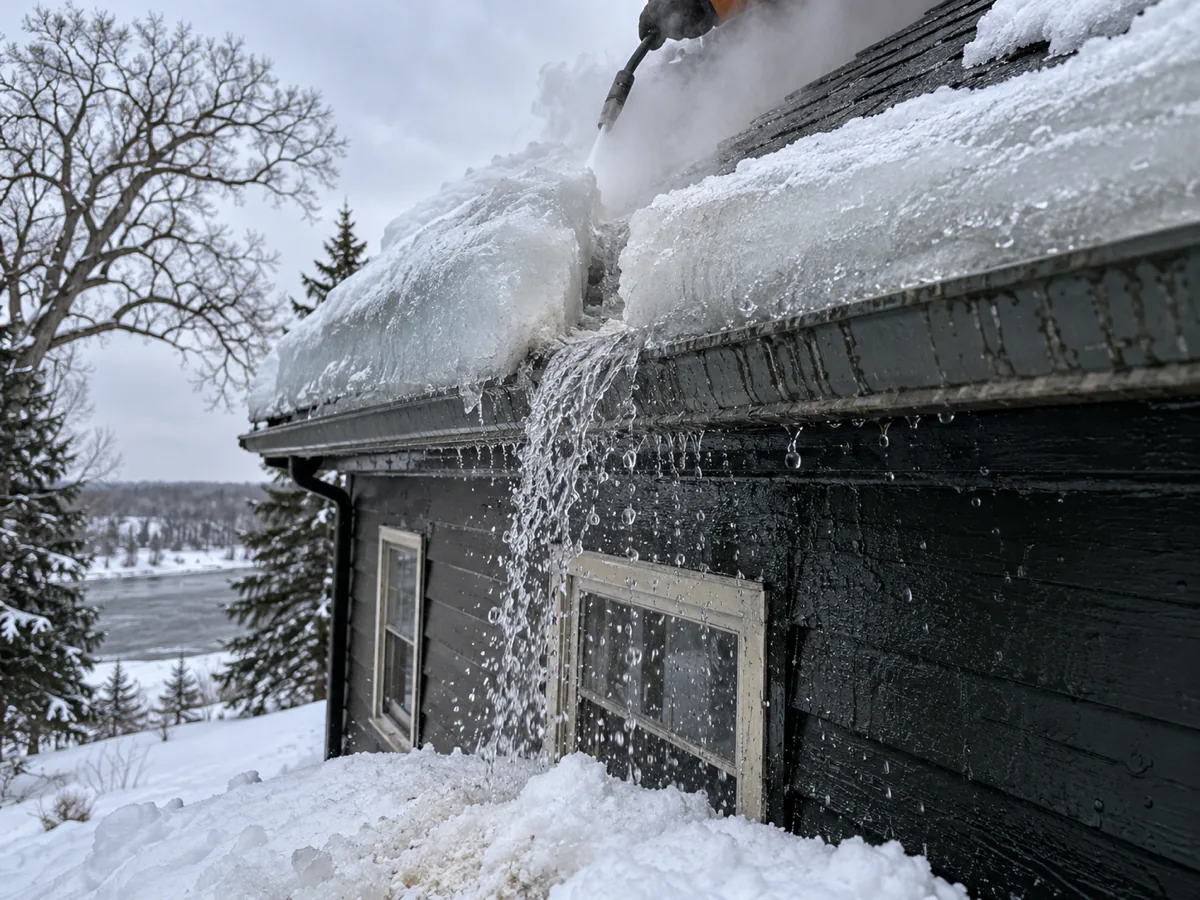
Trapped meltwater pouring through a gap steamed in an ice dam on an older St. Cloud house
The first job is a gap through the dam so the pooled water runs out.

Emergency Drain Path Through the Dam

If water is coming inside, our first job is to steam a gap through the dam so the pooled water can run out. University of Minnesota Extension describes that kind of channel as a stopgap good for a few days, so we keep going until the full dam is gone.

  • Gap through the dam first
  • A stopgap good for a few days
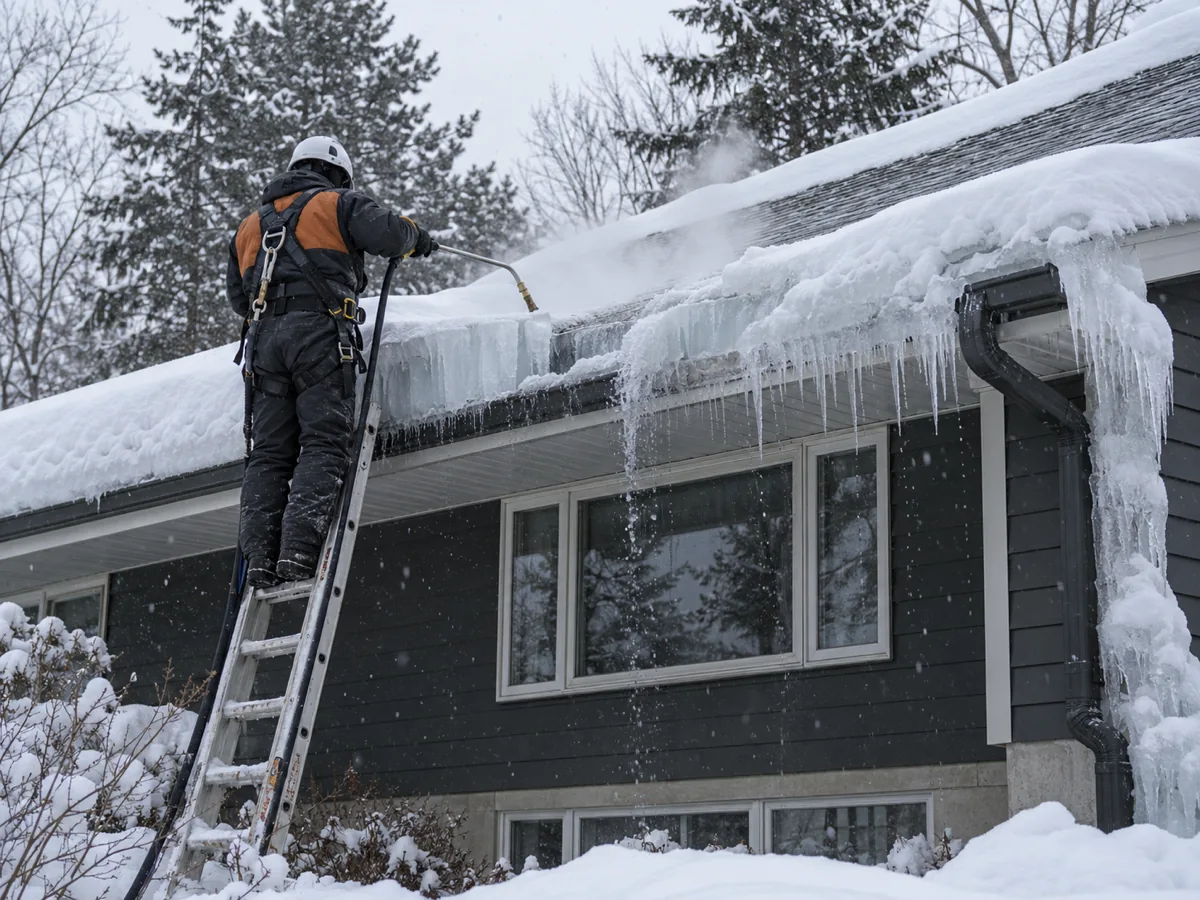
Technician steaming a thick ice dam in passes over the overhang and gutter of a St. Cloud home
A dam built over cold weeks is steamed back in passes down to the shingles.

Thick Eave Dams After a Long Freeze

On a dam built over several cold weeks, we steam it back in passes, starting with a path for the trapped water. We finish at the shingles and open the gutter and downspout outlets so the next thaw has somewhere to go.

  • Steamed back in passes
  • Outlets opened
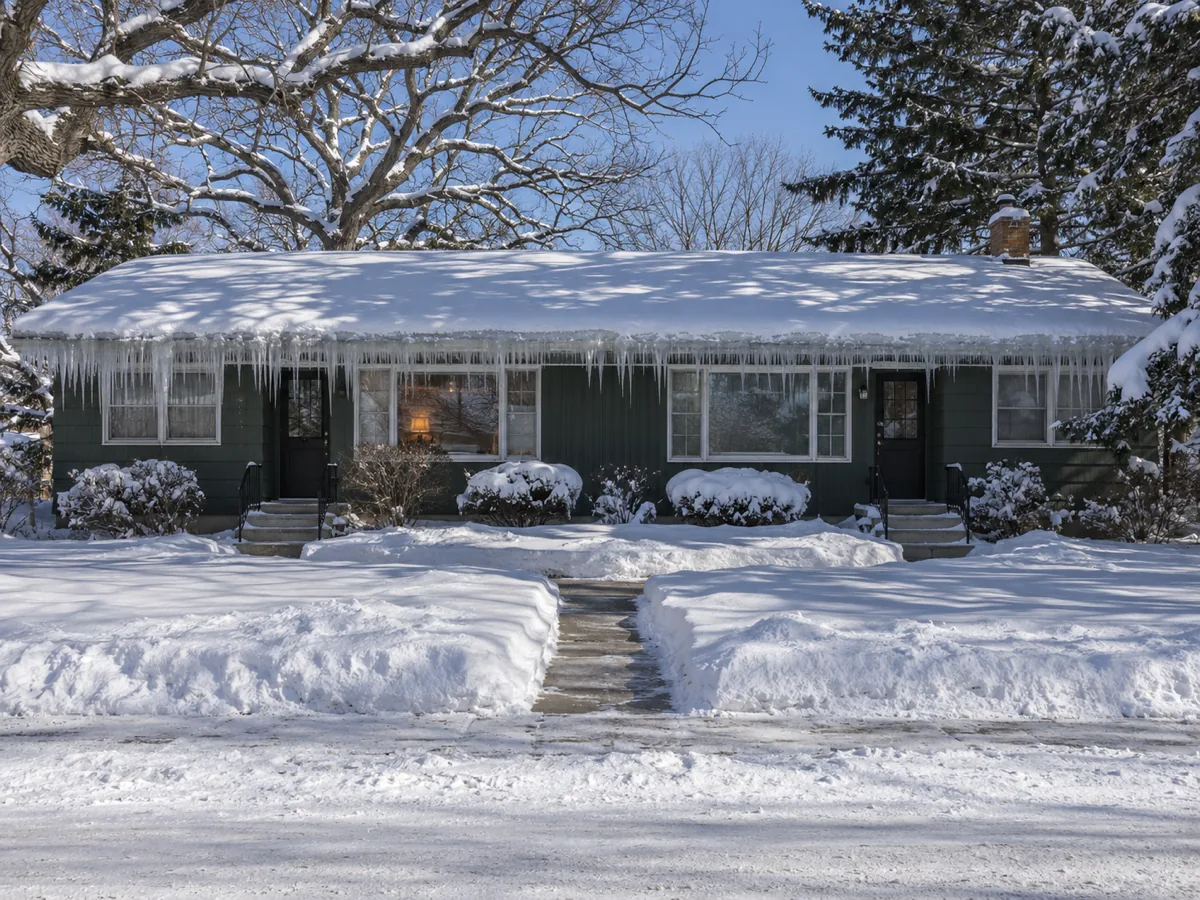
Ice dams along the shared roof of a St. Cloud side-by-side rental duplex
Shared and rental roofs can leak into more than one unit.

Rentals, Duplexes and Townhomes

Landlords and associations call us when a shared or rental roof leaks into more than one unit. We clear the eaves the owner or board points us to and report where the ice was heaviest.

  • Shared or rental roofs
  • Where the ice was heaviest

Central Minnesota Weather and Permit Facts

These four St. Cloud facts change when dams leak and what to plan for once the ice is gone. Price follows time spent on the roof, explained on our homepage.

March thaw in St. Cloud with roof snow melting fast and water streaming from an iced eave

March Brings Most of the Thaws

NOAA's normals give St. Cloud 23.6 days with a high over 32°F in March, more than three times January's 6.9. That is the month a winter's worth of ice starts to melt, so dams that held all winter often leak then.

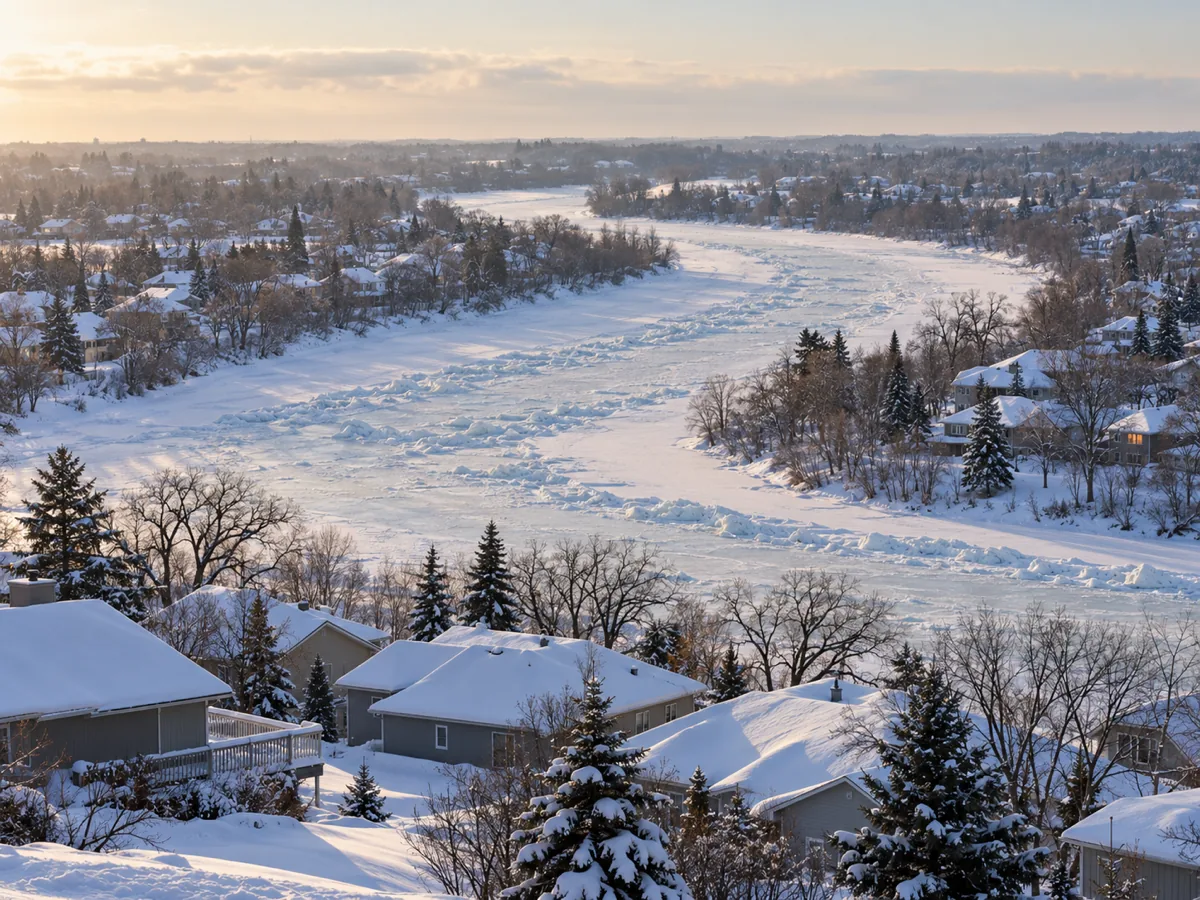
Snowy St. Cloud rooftops on both banks of the frozen Mississippi River, a city spanning three counties

One Permit Office for Three Counties

The city sits in Stearns, Benton and Sherburne counties, yet roofing permits inside city limits come from the City of St. Cloud Building Safety. If a leak leads to new shingles, Minnesota code calls for ice barrier from the eave until it is two feet in from the outer wall line.

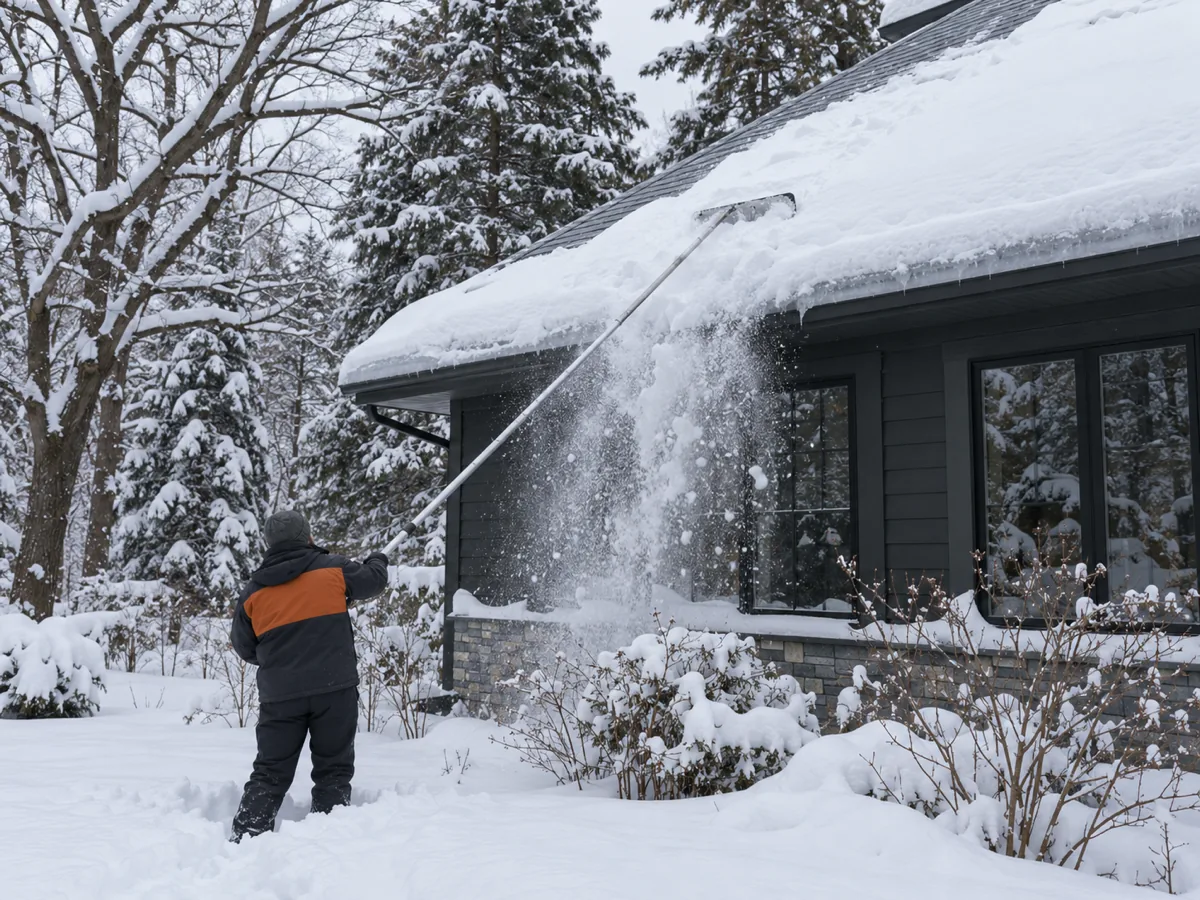
Homeowner pulling snow off the lower roof of a St. Cloud house with a roof rake from the ground

Raking From the Ground

Pulling snow off the lower roof removes one ingredient of a dam, though University of Minnesota Extension warns a rake may damage roofing. Our guide on whether to roof rake or call a crew covers when each makes sense.

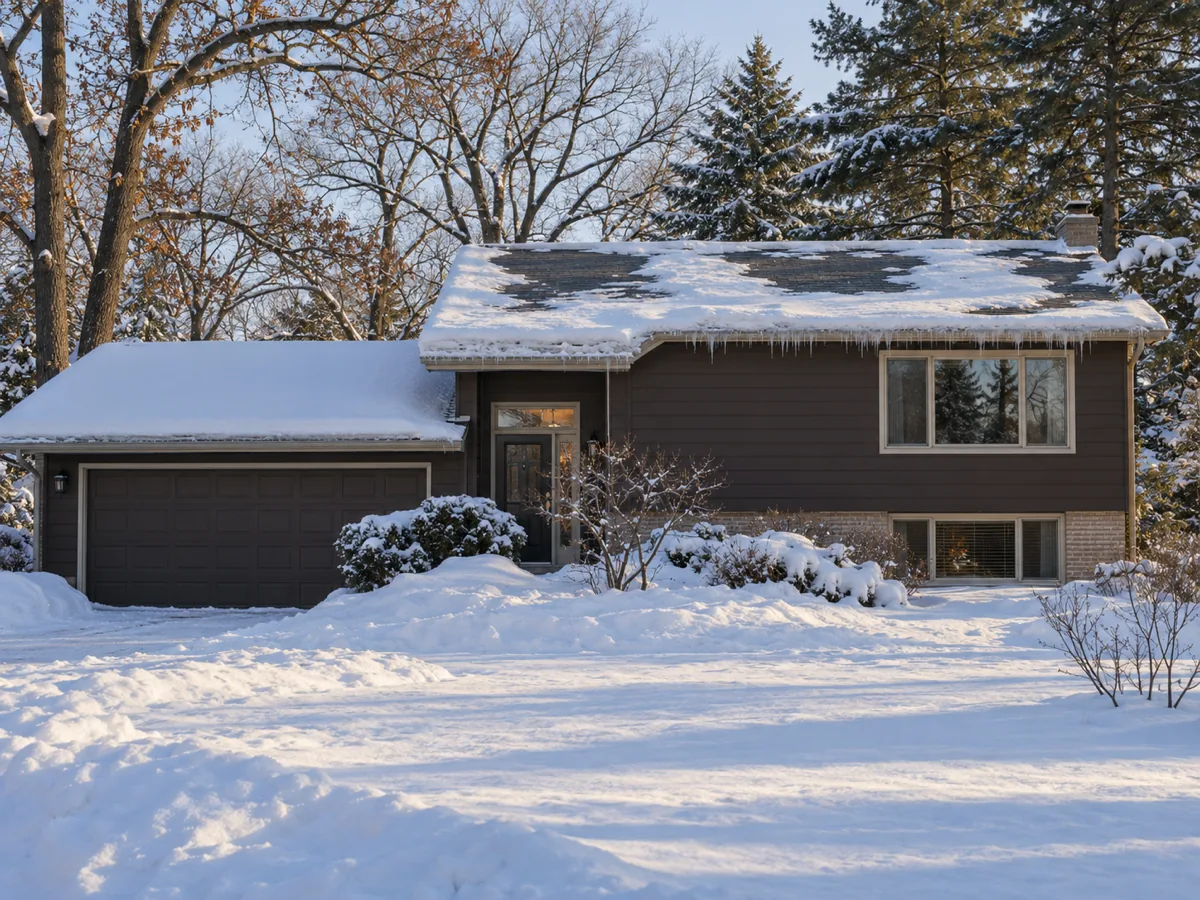
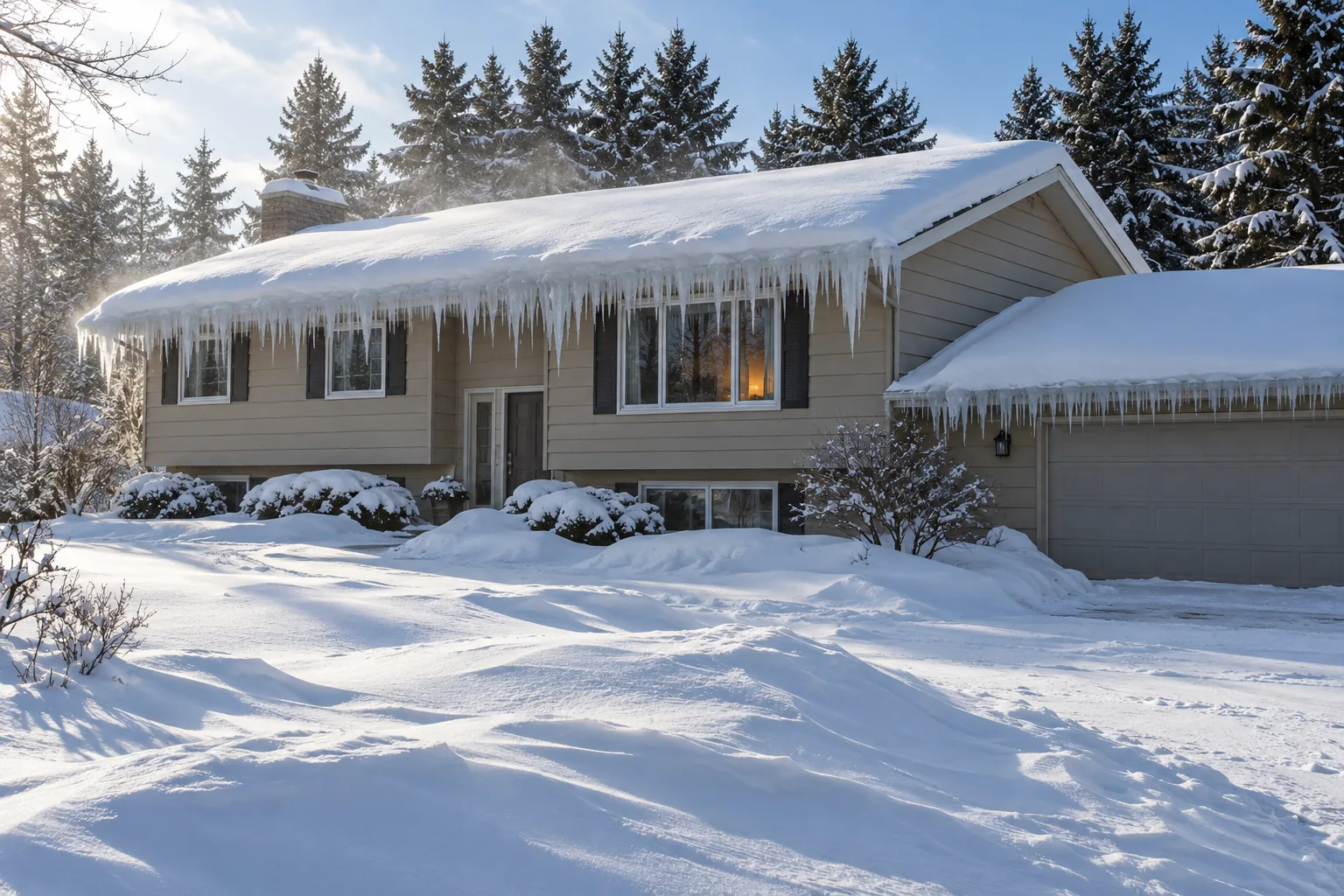
Early-1980s St. Cloud split-entry home with melted warm spots on the roof snow and ice at the eave

Houses From the Early 1980s

The Census puts St. Cloud's median year built at 1981, and 3,446 homes date from 1939 or earlier. On houses of either age, we point out the warm spots where snow melted first so you know where attic air is escaping.

Call for Emergency Ice Dam Removal

Water dripping from a St. Cloud ceiling during a thaw is an emergency, and our line is answered 24/7.

Call {phone}

Call (612) 471-2509
Frost on roofing nail tips and the underside of the roof deck in a St. Cloud attic, a sign of heat leaking into the attic

Our Service Areas in St. Cloud, MN and Nearby Communities

We cover every St. Cloud neighborhood and the towns around the city. For anywhere else, see other Minnesota cities we cover.

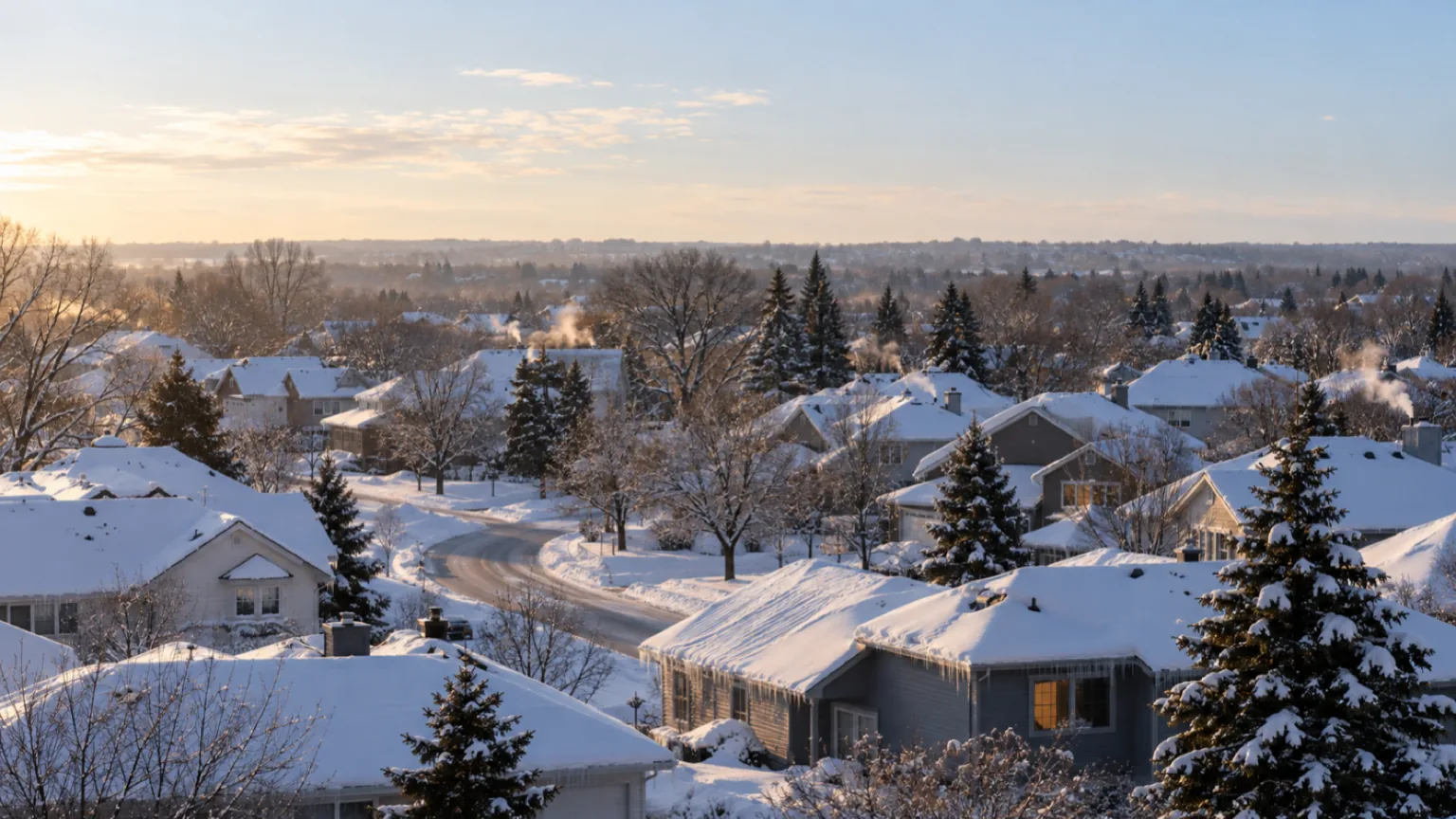
Elevated winter view over snow-covered suburban rooftops and bare oaks in the Twin Cities metro of Minnesota
3St. Cloud ZIP codes

St. Cloud, by ZIP code

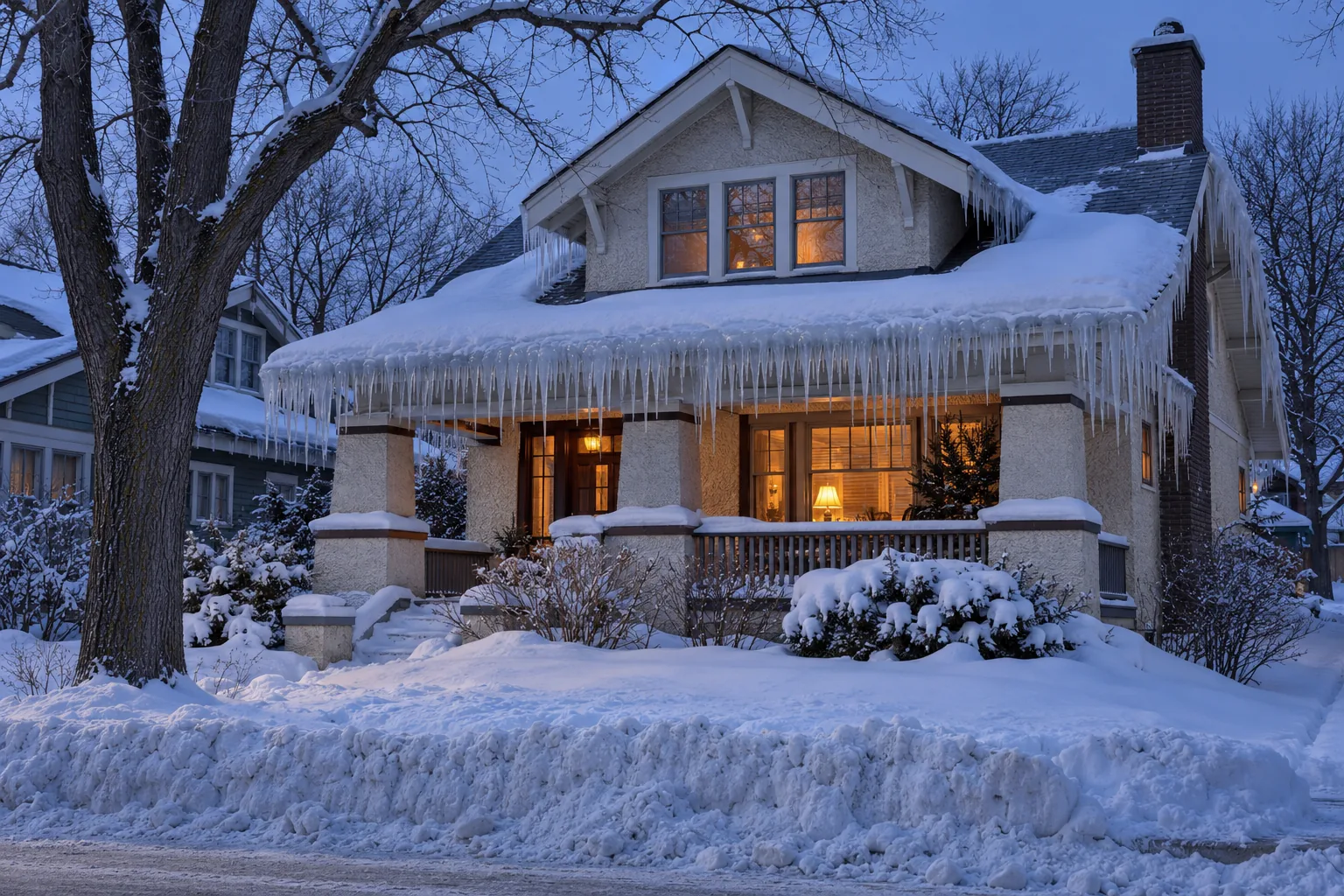
  • 1920s story-and-a-half Minneapolis bungalow under deep snow with a heavy ice dam and icicles along the porch eave
    55406

    Minneapolis, MN

    Hennepin County city on the Mississippi River

    Minneapolis sees fewer days that stay frozen than St. Cloud, 72.3 a year at its airport station, so dams there melt and refreeze more often.

    Minneapolis ice dam removal

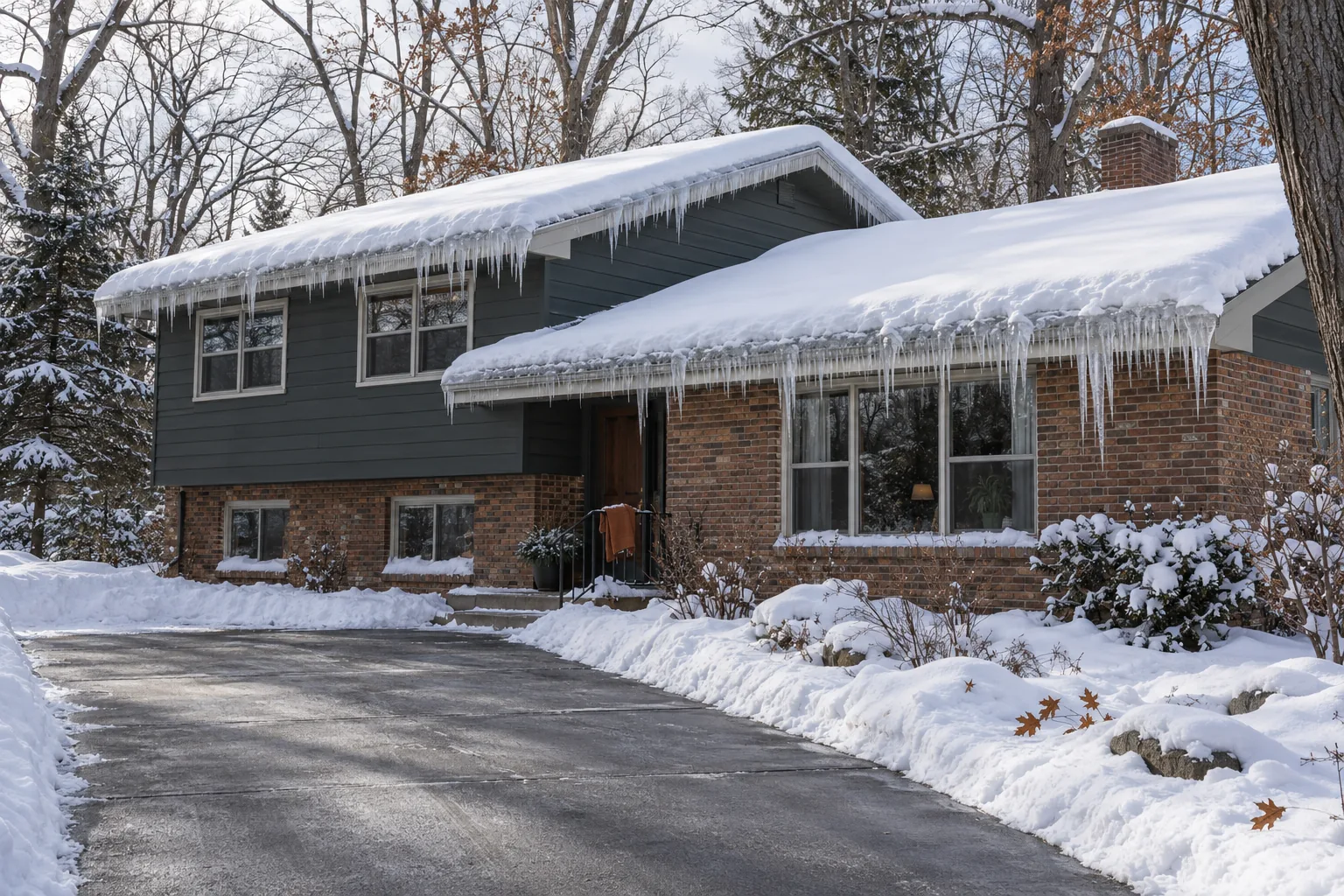
  • 1960s Roseville split-level with ice dams where the upper roof drains onto the lower roof, under deep snow
    55113

    Roseville, MN

    Ramsey County suburb north of St. Paul

    Roseville's median home dates from 1969, older than St. Cloud's 1981 figure, and its roofing permits come over the counter at City Hall.

    Ice dams on Roseville homes

  • 1980s Rochester split-entry home under 50-plus inches of seasonal snow with ice dams and icicles on the eave
    55901

    Rochester, MN

    Olmsted County city, southeast Minnesota

    Rochester gets 53.1 inches in a normal snow season, more than St. Cloud, and every residential re-roof there has needed a permit and inspections since May 1, 2025.

    Rochester service details

  • St. Cloud State University
  • Sartell
  • Sauk Rapids
  • Waite Park
  • St. Joseph
  • St. Augusta

FAQs About Ice Dam Removal in St. Cloud, MN

Here are the questions St. Cloud homeowners and landlords ask us most during a long freeze.

Your question isn't here?

(612) 471-2509Call now

Do you work on the Benton and Sherburne county side of St. Cloud?

Yes. We work in all three counties the city spans, on both sides of the Mississippi. Any roofing permit inside city limits still comes from the City of St. Cloud Building Safety.

Why do St. Cloud ice dams get thicker than Twin Cities dams?

Longer cold stretches. Only 6.9 days in an average St. Cloud January top 32°F, so a dam can keep building for weeks without a real melt to slow it.

Should I rake the roof before your crew gets here?

Only from the ground, and only if it is safe. University of Minnesota Extension notes a roof rake can damage roofing, so leave the dam itself alone and keep the walkway to the house clear.

Does a heavy snow winter mean more ice dams in St. Cloud?

Usually, yes. Snow on the roof is one of the ingredients Extension lists, so a winter like the record 88.2 inches of 2022-23 gives a warm attic far more snow to melt.

Call for Ice Dam Removal in St. Cloud, MN

Tell us how thick the ice looks from the yard and whether any ceiling is stained, and we will plan for a long-freeze dam. Before next winter, read how the Minnesota ice dam season runs.

Call {phone}

Call (612) 471-2509